National Dish Ukraine: Paska (Recipe)

In this article
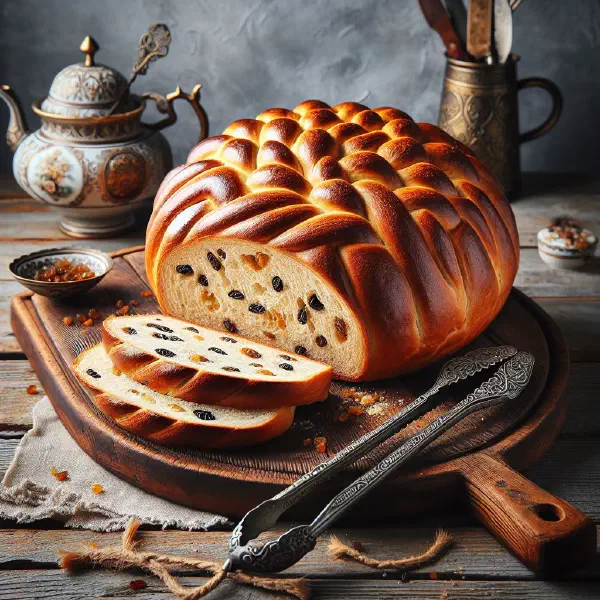
Discover Paska, the fragrant sweet bread that lies at the heart of every Ukrainian Easter. With its golden crust, airy crumb and gentle whisper of vanilla, this festive loaf fills the kitchen with warmth long before it reaches the table. Every family guards its own version, yet the spirit is always the same: a bread baked to be shared, to mark the season of renewal and to draw loved ones together around one joyful table.
About Paska
Paska is far more than a simple sweet bread. It is a treasured Ukrainian national dish baked above all at Easter. This lovely loaf wins hearts with its airy texture and the seductive scent of vanilla that drifts through the room as it bakes. In countless Ukrainian households, baking paska is a fixed part of the Easter rituals, a tradition that links one generation to the next. Every family keeps its own secret recipe, yet at its core the method stays the same, celebrating a sense of community and the pure joy of the festival.
Ingredients (serves 1–2)
- 500 g flour
- 250 ml milk
- 100 g sugar
- 4 eggs
- 100 g butter
- 1 sachet vanilla sugar
- 1 sachet dried yeast
- A pinch of salt
- Optional: raisins or almonds
Shopping for the ingredients
When shopping for paska, it is worth choosing good-quality products for the best result. Fresh eggs are especially important, as they give the bread its lovely freshness and its characteristic flavour. The butter should also be of good quality to make the dough rich and aromatic. Many of the other ingredients, such as sugar and flour, are easy to find in any supermarket, but it pays to look out for special varieties like Manitoba flour, which gives a particularly fluffy dough.
Preparing the dish
Before you begin making paska, it is important to have all the ingredients prepared and ready to hand. This includes warming the milk and melting the butter so that both are pleasantly lukewarm. In a small bowl, activate the yeast together with a teaspoon of sugar in the warm milk until it foams. While the yeast does its work, crack the eggs and whisk them in a larger bowl to a smooth, even mixture.
Step-by-step instructions
- Add the active yeast to the egg mixture and combine well.
- Sift the flour into the mixture and add the sugar, vanilla sugar and salt.
- Work the melted butter into the dough and knead everything thoroughly.
- Cover the dough and leave it to rise in a warm place for about 1–2 hours, until risen.
- After proving, knead the dough again and place it into a greased baking tin.
- Leave to rise once more, until the dough has filled the tin nicely.
- Bake in a preheated oven at 180°C for about 30–40 minutes, until the surface is golden brown.
- Once baked, remove from the oven and leave to cool on a wire rack.
Gluten-free / lactose-free version
To make paska gluten-free or lactose-free, you can use a gluten-free flour such as rice flour or a ready-made gluten-free baking mix. Take care to activate the yeast with whichever liquid you have chosen. Soya or almond milk are good alternatives to ordinary milk. The butter, too, can be replaced with vegan margarine, which makes the recipe suitable for both the lactose-intolerant and vegans alike.
Tips for vegans and vegetarians
If you would like to make paska vegan, you can replace the eggs with apple purée or ground flaxseed. For the dough, choose plant-based milk and margarine. Don’t forget to check that the yeast you use is vegan. The result is an equally delicious paska that does full justice to those special festive moments and wins over plenty of guests.
More tips and tricks
One important tip when baking paska is to knead the dough well to achieve a lovely texture. Give the dough enough time to rise so the yeast can develop its full effect. It also helps to place a bowl of water in the oven while baking to create a moist environment, which makes the bread especially fluffy. Loosely covering the loaf during baking can help, too, to prevent it browning too quickly.
Adapting the recipe to your taste
Paska can be adapted to your heart’s content. Add raisins, almonds or even chocolate chips, for example, to give the recipe a personal touch. Use different flavourings, such as lemon zest or other spices, to make the bread even more interesting. Experiment with various types of flour or sweet additions to create the perfect paska that suits your own taste exactly.
Ingredient substitutions
If you don’t have some of the ingredients for paska to hand, there are plenty of alternatives. Instead of sugar, you can use honey or agave syrup to reach a natural sweetness. For those with allergies, there are also special flour blends based on nuts or pulses. A little creativity when swapping ingredients can bring out new flavours and textures that make your paska truly one of a kind.
Drink pairing ideas
Paska pairs beautifully with a range of drinks, whether a fresh fruit juice or an aromatic tea. Choose a mild herbal tea to complement the sweet flavour of the bread. A sparkling crémant or prosecco can also make an elegant addition to the Easter celebration. For children, a fruit soda or homemade lemonade rounds off the sweet treat nicely.
Serving and presentation ideas
A lovely presentation of paska can make the celebration feel even more special. Use rustic baskets or a pretty cake stand to offer the bread in style. Decorated with edible flowers or fresh herbs, your loaf becomes the centrepiece of any table. Take care, too, to slice the paska and dress it gently, to show off its texture and aroma to their best advantage.
A bit of history
Paska has a long history and is deeply rooted in Ukrainian culture. It symbolises the feast of the Resurrection of Jesus Christ, and the arrival of spring and the renewal of life. Traditionally the bread is blessed during church services and stands for community and good cheer. Sharing paska is a sign of hospitality and love within a family and among friends, a spirit that runs through so much of Ukrainian cuisine.
More recipe ideas
Summary: Paska
In short, paska is far more than a delicious sweet bread; it is a symbol of Ukrainian Easter traditions and of family unity. With carefully chosen ingredients and a loving preparation, the result is a loaf that appeals to the palate and brings hearts together. The adaptations and variations are endless. Let Ukrainian culture inspire you and enjoy this wonderful Easter bread in the company of your family, perhaps rounding off the feast with a slice of Makivnyk or some sweet Kutia.