National Dish United Arab Emirates: Dubai Chocolate (Recipe)
In this article
It snaps as you break it, and then a green filling appears that crackles. Dubai chocolate is a thick bar filled with pistachio cream and toasted pastry strands. In the shops a single bar costs many times the price of ordinary chocolate. At home you need a bar mould, a little patience while tempering and about an hour of chilling time.
About Dubai Chocolate
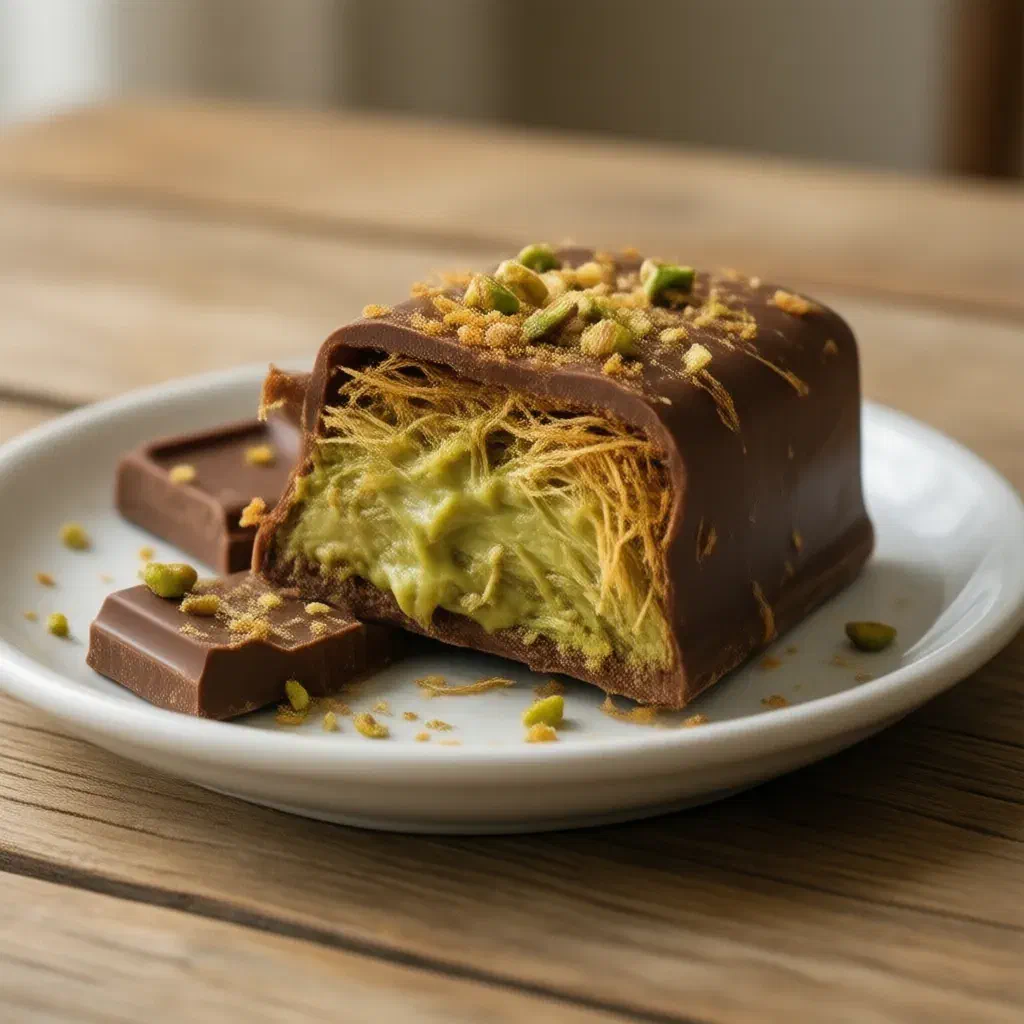
Dubai chocolate is a filled chocolate bar from the United Arab Emirates. The shell is usually milk chocolate, and the filling is pistachio cream and kadayif. That is the name of the wafer-thin pastry strands also used across the Middle East to bake Knafeh. Toasted in butter, the strands turn golden brown and stay crisp in the cream. That is the whole appeal of the bar. Smooth, sweet chocolate on the outside, and inside a nutty, slightly salty mixture with plenty of bite. At 2 to 3 cm high, a bar is much thicker than a normal one. It is eaten in small pieces with coffee or simply on its own; it is not really a plated dessert.
Ingredients (serves 1–2)
- 150 g milk chocolate (couverture, at least 30 % cocoa butter)
- 50 g kadayif (angel hair pastry strands, fresh or frozen)
- 15 g butter
- 80 g pistachio cream (from a jar, at least 40 % pistachios)
- 1 tbsp tahini (sesame paste)
- 1 pinch of salt
- 10 g chopped pistachios for sprinkling
Shopping for the ingredients
You will find kadayif in Turkish or Arab supermarkets, usually in the freezer section in 500 g packs. You can freeze whatever is left over again. With the pistachio cream it pays to read the ingredients list. Cheap creams are largely sugar and palm oil and barely taste of pistachio. Good ones contain 40 % pistachios or more, often from Sicily or Turkey. For the chocolate, use couverture rather than ordinary bar chocolate. It contains more cocoa butter, is easier to temper and flows more thinly into the mould. Tahini comes light and dark; the light kind suits the filling.
Preparing the dish
Thaw frozen kadayif for about 30 minutes at room temperature and pull it apart with your fingers into short pieces of 1 to 2 cm. Have a bar mould ready, silicone or polycarbonate, roughly 16 x 8 cm and 2 cm deep. The mould must be completely dry, as even a single drop of water makes chocolate seize. Chop the couverture finely and divide it: 100 g for melting and 50 g for seeding. For two bars, double all the quantities.
Step-by-step instructions
- Melt the butter in a frying pan over a medium heat, add the kadayif and toast it, stirring constantly, for 6 to 8 minutes until it is evenly golden brown.
- Leave the kadayif to cool on a plate for 10 minutes, then mix it with the pistachio cream, tahini and salt to a firm mixture.
- Melt 100 g of the couverture over a bain-marie at no more than 45 °C, take the bowl off the pan and stir in the remaining 50 g of chopped couverture until the chocolate has cooled to about 30 °C.
- Pour two thirds of the chocolate into the mould, tilt it until the base and sides are coated, and let the excess run back into the bowl.
- Put the mould in the fridge for 10 minutes so the shell sets.
- Press the filling evenly into the mould, leaving a 3 mm border all round.
- Briefly warm the remaining chocolate back to 30 °C, pour it over the filling and smooth the surface with a dough scraper.
- Chill the bar for 45 to 60 minutes, turn it out of the mould and, if you like, sprinkle it with chopped pistachios, fixing them in place with a drop of melted chocolate.
Gluten-free / lactose-free version
Kadayif is made from wheat flour, which makes it the only ingredient containing gluten. Gluten-free angel hair pastry is hard to buy. Good substitutes are 40 g of gluten-free cornflakes or puffed quinoa, roughly crushed and briefly toasted in butter. For a lactose-free bar, use dark couverture with at least 60 % cocoa, which usually contains no milk, and toast with 1 tbsp of neutral oil instead of butter. Check the pistachio cream as well, as many brands contain milk powder.
Tips for vegans and vegetarians
The recipe is already suitable for vegetarians. It becomes vegan with three changes. Toast the kadayif in 1 tbsp of coconut oil; once toasted, you will hardly taste it. Instead of milk chocolate, use 150 g of dark couverture or a vegan alternative made with oat or rice. For the pistachio cream, choose a brand without milk powder. If you cannot find one, mix 60 g of pistachio paste with 20 g of icing sugar. The result is a little less sweet, which goes well with the dark shell.
More tips and tricks
The most common mistake is chocolate that is too hot. Worked above 32 °C, it turns grey and streaky and breaks without a snap. A kitchen thermometer costing a few euros saves a lot of bother. Toast the kadayif properly, as pale angel hair pastry goes soft and chewy in the cream. And let the strands cool before the pistachio cream goes in. Wrapped in film, the bar keeps in the fridge for about a week. It tastes best in the first three days, though; after that the kadayif draws moisture and loses its bite.
Adapting the recipe to your taste
White couverture instead of milk makes the bar much sweeter, and the green filling stands out especially well when you break it open. If you prefer it less sweet, use half milk and half dark chocolate. A few drops of rose water or a pinch of ground cardamom in the filling bring the flavour closer to Arab sweets. Instead of a bar mould, you can also fill praline moulds. The mixture is then enough for about 12 small pieces.
Ingredient substitutions
Pistachio cream can be replaced by 60 g of finely ground pistachios melted together with 30 g of white chocolate. Instead of tahini, 1 tbsp of almond butter works. If you have no kadayif, use crumbled sheets of filo pastry baked crisp in butter, or thin rice noodles, briefly deep-fried. The texture is then different, but similar. With hazelnut spread and toasted hazelnuts you get a variation that shares only its shape with the original.
Drink pairing ideas
The bar is very sweet and rich, so something bitter or dry goes well with it. A strong espresso or unsweetened Turkish-style coffee cuts through the sweetness. In the Emirates it is enjoyed with Arabic coffee flavoured with cardamom, which is lightly roasted and has almost no bitterness. Fresh mint tea without sugar or a glass of cold mineral water with a slice of lemon also work well.
Serving and presentation ideas
Do not cut the bar; break it. The broken edge shows off the green filling and pale strands better than a clean cut. Lay two or three pieces at an angle on top of each other on a small, light-coloured plate. A few chopped pistachios alongside are all the decoration you need. If you have guests, set the whole bar on a wooden board and only break it at the table.
A bit of history
The bar comes from Fix Dessert Chocolatier in Dubai, founded by Sarah Hamouda; the concept was created in 2021. In December 2023 a TikTok video by the food influencer Maria Vehera made the pistachio and knafeh pastry flavour famous almost overnight. In 2024 the trend reached Europe, and patisseries and supermarket chains brought out their own versions. In Germany, from December 2024 the Cologne Regional Court ruled in individual cases that chocolate from countries other than Dubai could not be sold as Dubai chocolate. The Cologne Higher Regional Court upheld this position in June 2025. The ingredients themselves are old. Pistachios and kadayif have been part of sweets such as pistachio baklava and knafeh for centuries.
More recipe ideas
Looking for more ideas? Discover more Emirati recipes.
Summary: Dubai Chocolate
A homemade bar costs far less than a shop-bought one. Three things matter: couverture tempered to 30 °C, well-toasted kadayif and a pistachio cream with a high nut content. Once you have practised tempering, the second bar takes half an hour plus chilling time.


