National Dish USA: Cake Pops (Recipe)
In this article
Leftover pound cake from the weekend is enough for a dozen cake pops. The cake is crumbled, kneaded into balls with a little frosting and dipped in chocolate on a stick. There is no baking involved, but you do need a fridge and a gentle touch. Allow just under two hours, a good hour of which is waiting time.
About Cake Pops
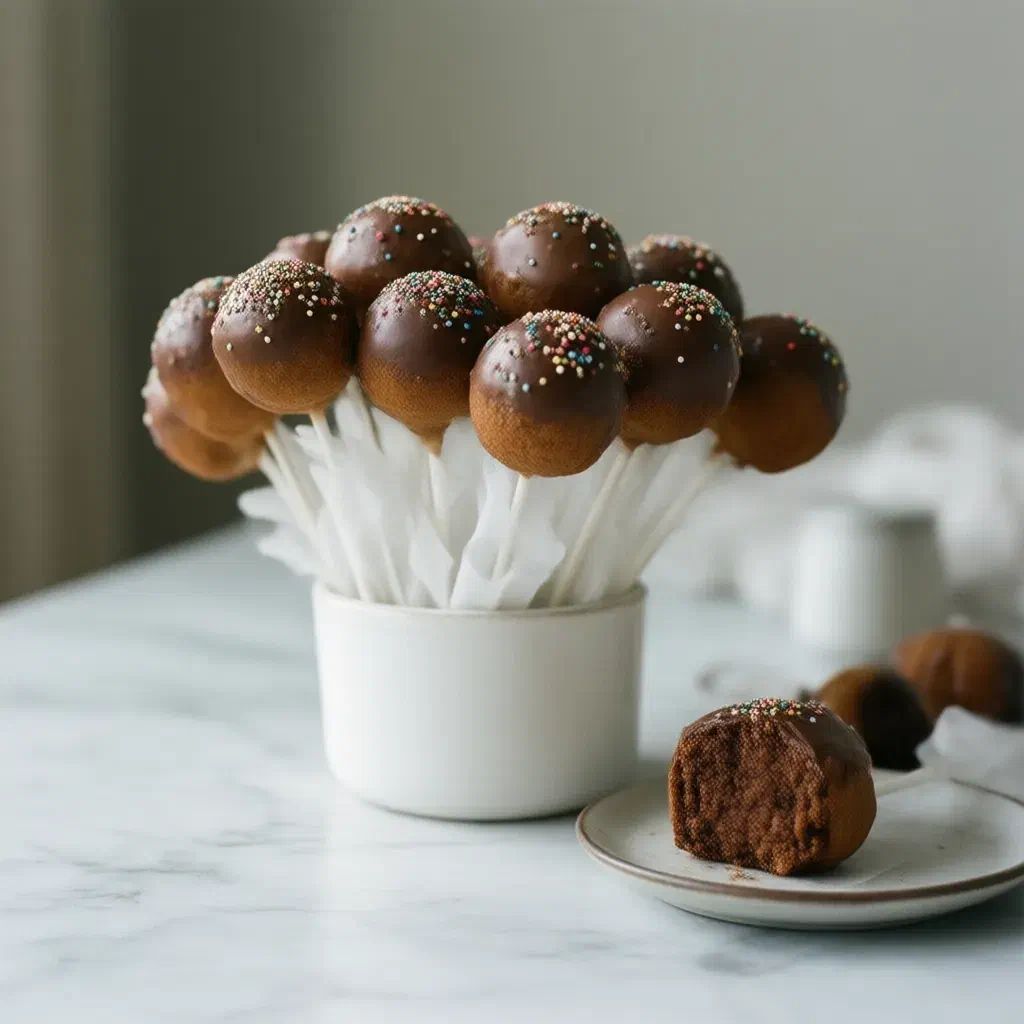
Cake pops are balls of cake on a stick, coated in chocolate or coloured icing. Inside they are soft and dense, almost like truffle filling, while the thin chocolate shell cracks as you bite. In the USA you find them at children’s birthday parties, at weddings and by the till in coffee shops. The mixture is made from ready-baked cake and frosting in a ratio of roughly three to one. A light pound cake gives a mild filling, while a chocolate cake or leftover Chocolate Brownies make the balls darker and richer. Cake pops made from the crumbs of a Red Velvet Cake are especially colourful, glowing red when you bite into them.
Ingredients (serves 1–2)
- 200 g day-old pound cake (marble, vanilla or chocolate)
- 25 g full-fat cream cheese
- 15 g soft butter
- 30 g icing sugar
- 150 g couverture chocolate (milk or dark)
- 1 tsp coconut oil
- 1 tbsp colourful sugar sprinkles
- 12 cake pop sticks (paper sticks, about 15 cm)
Shopping for the ingredients
You can bake the cake yourself or use a ready-made Madeira cake from the supermarket. What matters is that it has no icing or filling, otherwise the mixture turns too soft. Buy couverture rather than an ordinary bar of chocolate. It contains more cocoa butter, melts to a runny consistency and forms an even coating. Coloured candy melts from the baking aisle melt in a similar way and are brighter, but they mostly just taste sweet. Paper sticks are sold in craft and baking shops and in chemists. Plastic sticks work too, though the balls hold on to them slightly less well.
Preparing the dish
Cut the dark crust off the cake, as it crumbles poorly and makes the mixture blotchy. The butter and cream cheese should be soft. Line a board or tray that fits in your fridge with baking paper. To let the finished pops dry, you need a stand. A block of polystyrene, a jar full of sugar or an upturned egg box with holes will also do. For 24 pops, double the quantities; the chilling times stay the same.
Step-by-step instructions
- Crumble 200 g cake with your fingers or in a blender into fine crumbs with no larger pieces.
- Beat 25 g cream cheese, 15 g soft butter and 30 g icing sugar into a smooth cream, then knead it with the crumbs into a mixture that can be shaped and is not sticky.
- Shape the mixture into 12 balls of about 20 g each, roll them smooth between your palms and place them on the baking paper.
- Chill the balls for 30 minutes in the fridge and then 10 minutes in the freezer.
- Chop 150 g couverture and melt it with 1 tsp coconut oil over a warm water bath, without letting it go above 45 °C. Pour it into a narrow, tall glass.
- Dip each stick about 1 cm deep into the chocolate and push it halfway into a ball. Chill the pops for another 10 minutes.
- Holding each ball by its stick, dip it straight down until fully covered in the chocolate, pull it straight out and tap the stick lightly with your finger until the excess has dripped off.
- Scatter sugar sprinkles over the still-wet chocolate straight away and stand the pops upright in the stand. After about 20 minutes at room temperature the coating will be set.
Gluten-free / lactose-free version
Gluten-free cake pops work well with a gluten-free pound cake, either home-baked with a gluten-free flour blend or shop-bought. Couverture is usually gluten-free, but check the label for traces. Sprinkles sometimes contain wheat starch. For a lactose-free version, use lactose-free cream cheese and lactose-free butter along with dark couverture without milk ingredients, which will be shown on the ingredients list.
Tips for vegans and vegetarians
The pops are vegetarian if you use sprinkles without gelatine and without shellac (E 904). To make them vegan, use a vegan pound cake, for example one made with plant milk and apple purée instead of egg. In place of cream cheese and butter, use 25 g vegan cream cheese based on almonds or cashews and 15 g block margarine. For the coating, dark couverture with at least 55 % cocoa works well, as it usually contains no milk.
More tips and tricks
If the balls fall off the stick, the mixture was too warm or too moist. It is better to use a little less frosting; the balls should feel like modelling dough. Balls that are too cold, straight from the freezer, make the chocolate crack because they expand as they thaw. Ten minutes in the freezer is enough. If the couverture is too thick, add a little more coconut oil. Finished cake pops keep in a tin in the fridge for 4 to 5 days. They can also be frozen; undipped, the mixture keeps for 2 months.
Adapting the recipe to your taste
Children like light cakes with white couverture and colourful sprinkles best. Adults often prefer dark versions with dark chocolate and a pinch of sea salt. A teaspoon of instant espresso in the cream turns the pops into little mocha balls. At Easter, shape eggs instead of balls, and at Halloween, colour white couverture orange with powdered food colouring. Chopped pistachios or desiccated coconut can replace the sprinkles.
Ingredient substitutions
Instead of cream cheese you can use chocolate hazelnut spread; in that case leave out the butter and icing sugar and use 40 g of the spread. Jam also binds the crumbs, but the balls turn out softer. Instead of coconut oil, a teaspoon of neutral oil will do, though the coating sets a little less firmly. If you have no sticks, simply roll the balls in chocolate without a stick and set them in paper sweet cases. In the USA they are then called cake balls.
Drink pairing ideas
A glass of cold milk is the American classic with anything chocolatey. For adults, a cappuccino or an espresso balances the sweetness. At children’s birthday parties, homemade strawberry lemonade or a spritzer of cloudy apple juice and sparkling water is a good choice. A mild, unsweetened fruit tea works well too.
Serving and presentation ideas
Cake pops look best standing upright. Stand them in a vase filled with sugar or coffee beans, or in a polystyrene block covered with paper. At weddings the sticks are often wrapped with a narrow satin ribbon. For a buffet, a simple glass holding three to five pops per colour is enough. Laid flat on a plate, they lose their shape and stick.
A bit of history
Cake pops are a recent invention. They were made popular by the American food blogger Angie Dudley, who writes under the name Bakerella. In 2008 she showed cake balls on sticks on her blog, the idea spread quickly, and in 2010 her book Cake Pops came out. Shaping leftover cake into balls with cream, on the other hand, is old. German patisseries, too, have long turned cake trimmings into balls and slices. What was really new was the stick, which turned a way of using up leftovers into a party treat.
More recipe ideas
For even more ideas, discover more American recipes.
Summary: Cake Pops
Cake pops need no oven, just day-old cake, a little frosting and chilled balls. What counts is the right firmness of the mixture and runny couverture. With sprinkles, colours and ribbons on the sticks they can be adapted to any occasion and made four to five days ahead.