National Dish USA: Cronut (Recipe)
In this article
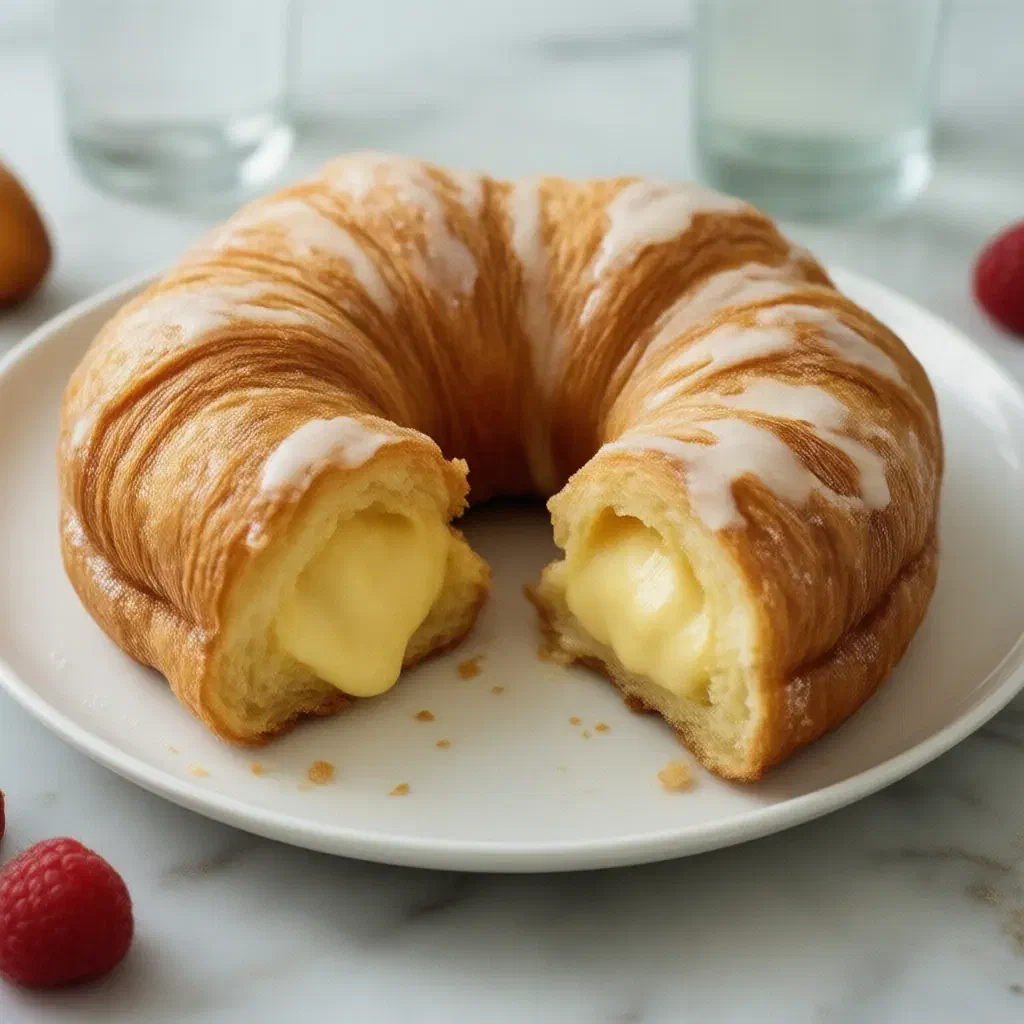
A cronut has the shape of a doughnut and the inside of a croissant. When you bite into it, the layers shatter, and vanilla custard waits in the middle. This pastry takes time, because butter is worked into the dough and chilled several times. In return you get four pieces that have little in common with a shop-bought doughnut.
About Cronut
The cronut is a deep-fried pastry made from laminated yeast dough, meaning a dough into which a block of butter is folded several times. It is cut out as a ring like a doughnut, fried in oil, then rolled in sugar, filled and topped with glaze. The result is crisp on the outside, flaky and moist inside. It was invented by the French pastry chef Dominique Ansel at his bakery in New York. The name is a blend of croissant and doughnut and is registered there as a trademark. Copies from other bakeries therefore often go by other names, such as croissant doughnut. It is best eaten within the first few hours after frying, as a sweet breakfast or with coffee.
Ingredients (serves 1–2)
- 150 g wheat flour (Type 550)
- 20 g sugar
- 3 g salt
- 5 g dried yeast
- 1 egg yolk
- 75 ml lukewarm milk
- 15 g soft butter
- 75 g cold butter for the butter block
- 1 l neutral oil for frying (rapeseed or sunflower oil)
- 50 g sugar for rolling
- 100 ml milk for the custard
- 1 egg yolk for the custard
- 20 g sugar for the custard
- 8 g cornflour
- 1/2 tsp vanilla extract
- 50 g icing sugar
- 2 tsp lemon juice
Shopping for the ingredients
Type 550 wheat flour works well for the dough, as it has enough gluten to hold the layers. The butter for the butter block matters most. Use sweet cream butter with 82 % fat, not a spreadable butter and not a reduced-fat butter, which contains too much water. You will find dried yeast in the baking aisle. For frying you need a heat-stable oil, and rapeseed oil from the supermarket is fine. A kitchen thermometer is worth having, because temperature is what decides the outcome here. Vanilla extract comes in small bottles; alternatively, use the seeds of half a pod.
Preparing the dish
Allow a day in advance. The dough and the butter block must both be cold, otherwise they merge and no layers form. Beat the 75 g butter between two sheets of baking paper with a rolling pin into a 10 x 10 cm square and put it in the fridge. The vanilla custard is best cooked the evening before, as it must cool completely. For eight cronuts, double all quantities and beat out a butter block of 14 x 14 cm.
Step-by-step instructions
- Knead the flour, sugar, salt, dried yeast, egg yolk, lukewarm milk and soft butter for 6 minutes into a smooth dough, press it flat, wrap it and chill for 1 hour.
- Roll the dough out into a 15 x 15 cm square, lay the butter block on it diagonally and fold the corners of the dough over it so the butter is fully enclosed.
- Roll the parcel out into a rectangle of about 15 x 35 cm, fold it in thirds like a letter and chill for 30 minutes.
- Repeat the rolling, folding and chilling twice more, so three turns in total, then leave the dough to rest in the fridge for 2 hours or overnight.
- Roll the dough out 1.5 cm thick, cut out rings with an 8 cm outer and 3 cm inner diameter and leave them covered on baking paper to rise for 1–1.5 hours, until they have visibly puffed up.
- For the custard, bring 100 ml milk to the boil with the sugar and vanilla, stir the egg yolk and cornflour until smooth, pour in the hot milk while stirring and cook everything in the pan for 1 minute until thick, then cover and chill.
- Heat the oil to 175 °C and fry the rings one at a time for 1.5–2 minutes per side, until they are a deep golden brown.
- Let the cronuts drain briefly on kitchen paper and roll them in the sugar while still warm.
- Pipe the cooled custard in from the side at three or four points using a narrow nozzle, stir the icing sugar and lemon juice into a thick glaze and spread it over the top.
Gluten-free / lactose-free version
This dough does not work well gluten-free, because the layers need the gluten protein in wheat flour. Gluten-free puff pastry mixes do exist, but they barely rise when fried. To make the cronut lactose-free, use lactose-free milk and lactose-free butter, both found in the chilled aisle. Butter contains very little lactose anyway, but sensitive people should still choose the lactose-free option.
Tips for vegans and vegetarians
The recipe is suitable for vegetarians as it is. To make it vegan, use a plant-based butter in block form, for example from Alsan or Naturli, which stays firm when chilled. Soft margarine from a tub is unsuitable for laminating. Use oat or soya drink instead of milk, and replace the egg yolk in the dough with 1 tbsp oil. For the custard, cook 100 ml soya drink with 12 g cornflour, sugar and vanilla.
More tips and tricks
The most common mistake is butter that is too warm. If it pushes out at the edges while rolling, put the dough straight into the fridge for 20 minutes. If the oil is too cool, the cronuts turn greasy; if it is too hot, the centre stays raw. Test the first ring by breaking it open. Cronuts taste best on the day they are made. Unfilled, they keep until the next morning in a paper bag. Filled ones belong in the fridge and should be eaten the same day.
Adapting the recipe to your taste
Dominique Ansel changes the filling every month, so feel free to vary it too. Instead of vanilla custard, raspberry jam, lemon curd or Nutella work well. The glaze can be coloured with cocoa, matcha or a little fruit purée. If you prefer it simpler, leave out the filling and glaze and just roll the rings in cinnamon sugar. Fry the cut-out dough centres alongside as little balls.
Ingredient substitutions
If you want to save work, use ready-made croissant dough or Danish pastry dough from the chilled aisle, stack two sheets on top of each other and cut out the rings. The cronut will be flatter but taste similar. Fresh yeast can replace dried yeast at a ratio of 12 g to 5 g. Instead of lemon juice in the glaze you can use milk, and instead of rapeseed oil, groundnut oil.
Drink pairing ideas
A cappuccino or a flat white is the best match, as the coffee tempers the sweetness. Cold milk is the classic partner for doughnuts in the USA. If you like tea, go for a strong Earl Grey. A freshly squeezed orange juice works well if you are having the cronut for breakfast.
Serving and presentation ideas
Serve the cronut upright on a small plate so the layers show on the side. Cut one of them in half with a serrated knife to reveal the filling. A few fresh raspberries or a dusting of icing sugar on the plate is all the decoration you need.
A bit of history
Dominique Ansel, formerly executive pastry chef at the Paris house of Fauchon and at the New York restaurant Daniel, introduced the cronut at his bakery in SoHo in May 2013. Within a few weeks there were queues outside the shop every morning, a purchase limit per person and a black market for the pastries. Ansel had the name trademarked. Since then, imitations have appeared all over the world. Yeast dough fried in fat is ancient. What was new was the combination of dough made in the style of the French croissant, a doughnut shape, a filling and a glaze.
More recipe ideas
Looking for more ideas? Discover more recipes from the USA.
Summary: Cronut
The cronut is a weekend project. If you have baked croissants before, you already know the technique; the only new part is the frying. If you like something more savoury, try the Maple Bacon Donuts, which get by with a simple yeast dough.