National Dish Uzbekistan: Mastava (Recipe)
In this article
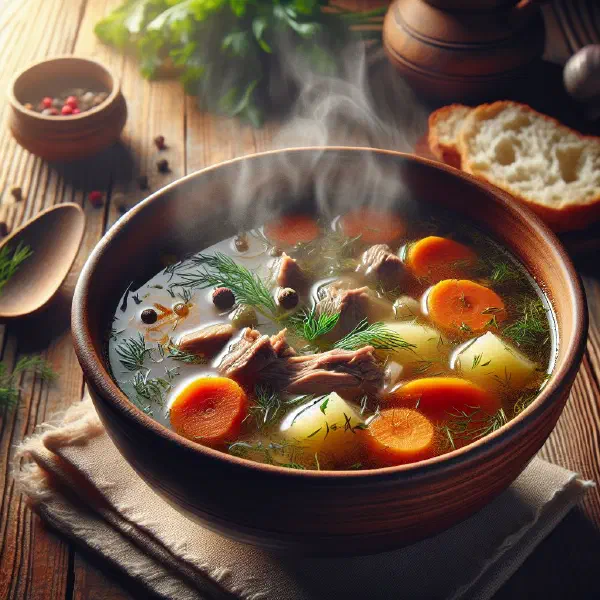
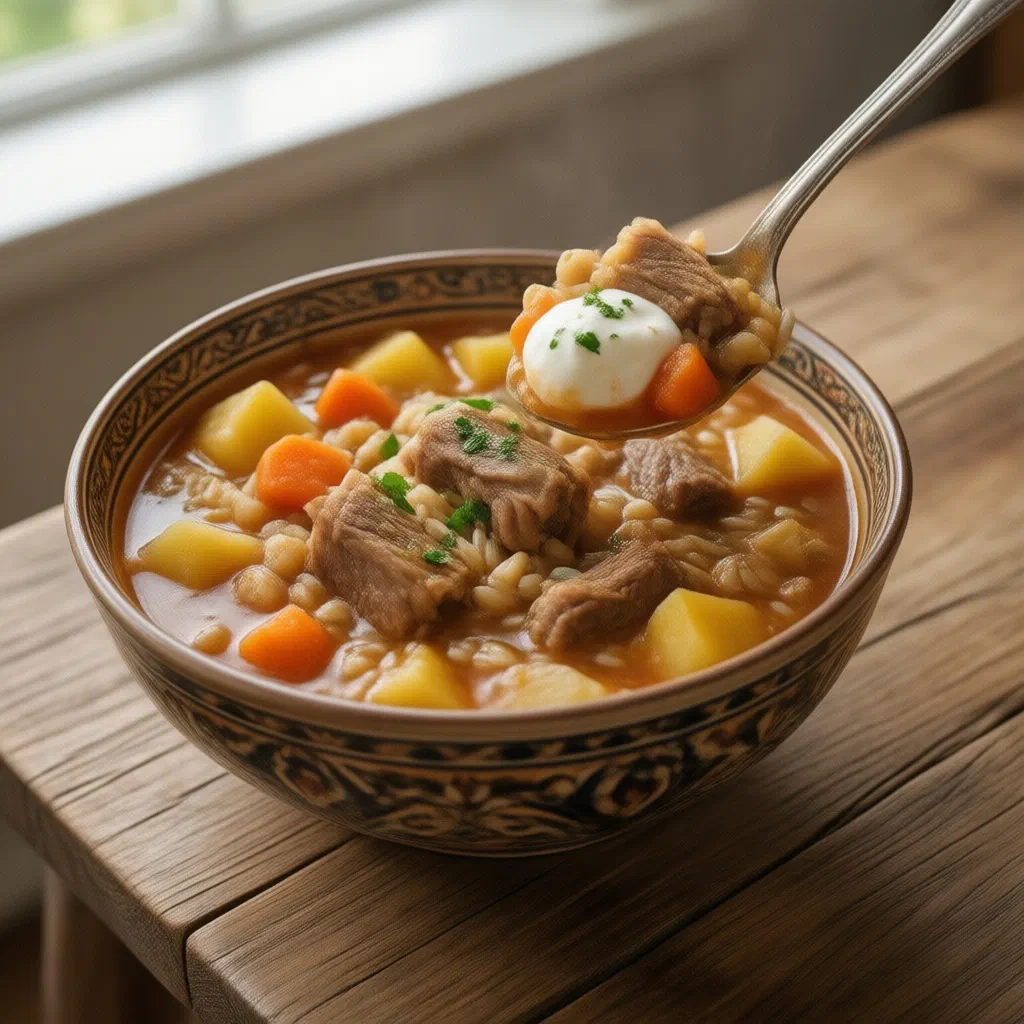
Discover Mastava, one of Uzbekistan’s most comforting bowls of food. Somewhere between a thick soup and a savoury rice porridge, it brings together tender meat, sweet carrots and warm, earthy spices in a single pot. It is the sort of dish that fills a kitchen with wonderful smells long before it reaches the table. Perfect for a relaxed evening with friends and family.
About Mastava
Mastava is a traditional Uzbek dish known for its hearty flavours and the gentle, restorative comfort of its ingredients. It is essentially a rice soup, soupy enough to eat with a spoon, substantial enough to count as a full meal, cooked with meat, vegetables and aromatic spices. Making Mastava is not only a pleasure at the table but a small tour through the history of Uzbekistan. The dish reflects the country’s rich culture and famous hospitality, and it is often served at celebrations and family gatherings.
Ingredients (serves 1–2)
- 200 g long-grain rice
- 300 g beef or lamb, cubed
- 1 large onion, chopped
- 1 large carrot, cut into strips
- 2 cloves of garlic, chopped
- 1 teaspoon cumin
- 2 tablespoons vegetable oil
- 1 litre vegetable or meat stock
- Salt and pepper to taste
- Fresh herbs to garnish, such as parsley or coriander
Shopping for the ingredients
To make Mastava you will want fresh, good-quality ingredients. The rice is best as a long-grain variety, since it keeps a loose, separate texture as it cooks. For the meat, look for fresh beef or lamb that is juicy and tender. The spices play a decisive role, so make sure your cumin is fresh. It is the difference between a flat broth and one with real depth. A good butcher and a well-stocked spice shelf are all you really need.
Preparing the dish
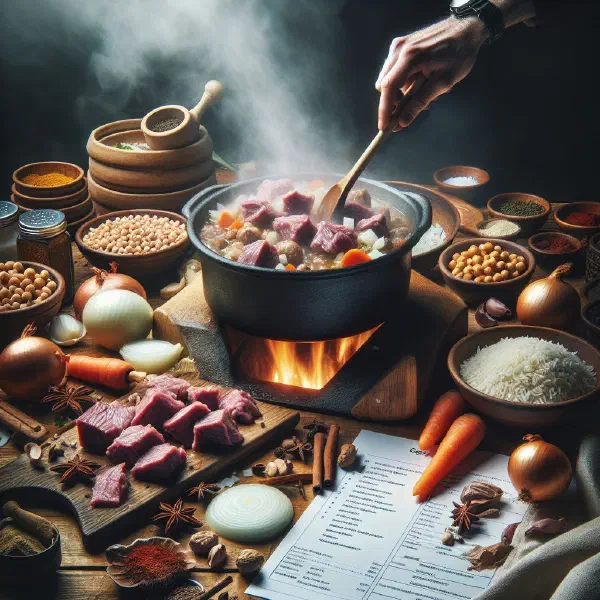
Preparing Mastava is straightforward and uncomplicated. First, rinse the rice thoroughly to wash away excess starch. While you are at it, cut the meat into even cubes and get the vegetables ready, including the onions and carrots. That means peeling everything and cutting it into small pieces so it all cooks through at the same rate. The same unhurried prep work pays off in other one-pot classics such as Dimlama.
Step-by-step instructions
- Heat the vegetable oil in a large pot and add the onions. Fry until golden brown.
- Add the cubed meat and brown it on all sides.
- Stir in the carrots and garlic and fry for a few minutes more.
- Add the rinsed rice and the stock, and stir everything together well.
- Season with cumin, salt and pepper, then bring to the boil.
- Reduce the heat and let the dish simmer for around 20–25 minutes, until the rice and meat are tender.
- Garnish with fresh herbs and serve.
Gluten-free / lactose-free version
For a gluten-free or lactose-free Mastava, it is simply a matter of choosing the right ingredients. Rice is naturally gluten-free, and the dish contains no dairy as standard. Just check that your stock is gluten-free as well if you are using a ready-made one, since many bouillon cubes contain wheat. With that one small check, everyone can enjoy this flavourful dish regardless of dietary restrictions.
Tips for vegans and vegetarians
To make a vegan or vegetarian version of Mastava, simply replace the meat with a mixture of pulses such as chickpeas or lentils. These are rich in protein and make for a genuinely filling meal. You can also add more vegetables, peppers, courgettes or aubergines, to boost the nutritional value and vary the flavour at the same time. Spices such as turmeric or paprika bring extra aroma to a meat-free pot.
More tips and tricks
When cooking Mastava it is important to keep all the ingredients in balance so the flavours sing together. If you let the rice rest for a few minutes after cooking, the aromas have time to develop properly. Do not forget to stir the pot occasionally while it simmers to stop anything catching on the bottom. A squeeze of lemon just before serving adds a bright, fresh accent.
Adapting the recipe to your taste
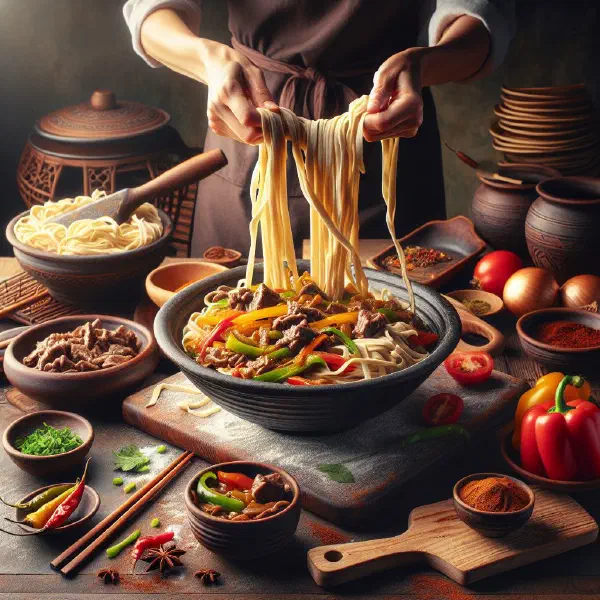
The basic ingredients of Mastava are flexible and easy to adjust to your liking. If you want a sharper kick, add a little chilli or cayenne pepper. Likewise, the type of meat can be swapped depending on what you have to hand or what you prefer, the same freedom you have with a good Lagman. Experiment with different vegetables to discover new flavour combinations.
Ingredient substitutions
If you do not have every ingredient for Mastava, there are plenty of alternatives. Instead of beef or lamb you can use chicken or even tofu. For the liquid, vegetable stock or a homemade broth lets you fine-tune the flavour. The rice, too, can be replaced with quinoa or couscous depending on your preference, which gives the dish an interesting twist.
Drink pairing ideas
To round off the Mastava experience, the right drink matters. Traditionally it is served with a refreshing herbal tea or a sweet black tea. For an alcohol-free option, sparkling water with lemon or a lively homemade lemonade works well, as does a glass of tangy Ayran. A lightly chilled white wine also suits this hearty dish and offers a pleasant contrast to its warm aromas.
Serving and presentation ideas
The way you present Mastava can lift the whole meal. Serve it in a shallow bowl and garnish generously with fresh herbs such as coriander or parsley. Consider scattering over a few toasted nuts or seeds for crunch. A colourful side of marinated vegetables, a crisp Achichuk Salad, for example, improves the look of the table and adds welcome freshness.
A bit of history
Mastava is part of Uzbekistan’s cultural identity. Its origins reach back centuries into the nomadic traditions of the Central Asian peoples. In those days it was essential to prepare nourishing, filling meals that also travelled well. Today Mastava remains hugely popular and is often shared with friends and family, reflecting the sense of community and hospitality that runs through Uzbek cuisine.
More recipe ideas
- Plov — another traditional rice dish from Uzbekistan
- Chuchvara Soup — a warming dumpling soup
- Somsa — pastry parcels filled with meat or vegetables
- Mashhurda — a thick rice and mung bean soup
Summary: Mastava
In short, Mastava is not only a delicious dish but a lovely journey into the culture of Uzbekistan. The combination of rice, tender meat and fresh vegetables makes for a hearty experience that is both filling and beautifully balanced in flavour. The possibilities for adapting it are wide open. Let this dish inspire you and enjoy the flavours of Uzbekistan.