National Dish Uzbekistan: Shivit Oshi (Recipe)
In this article
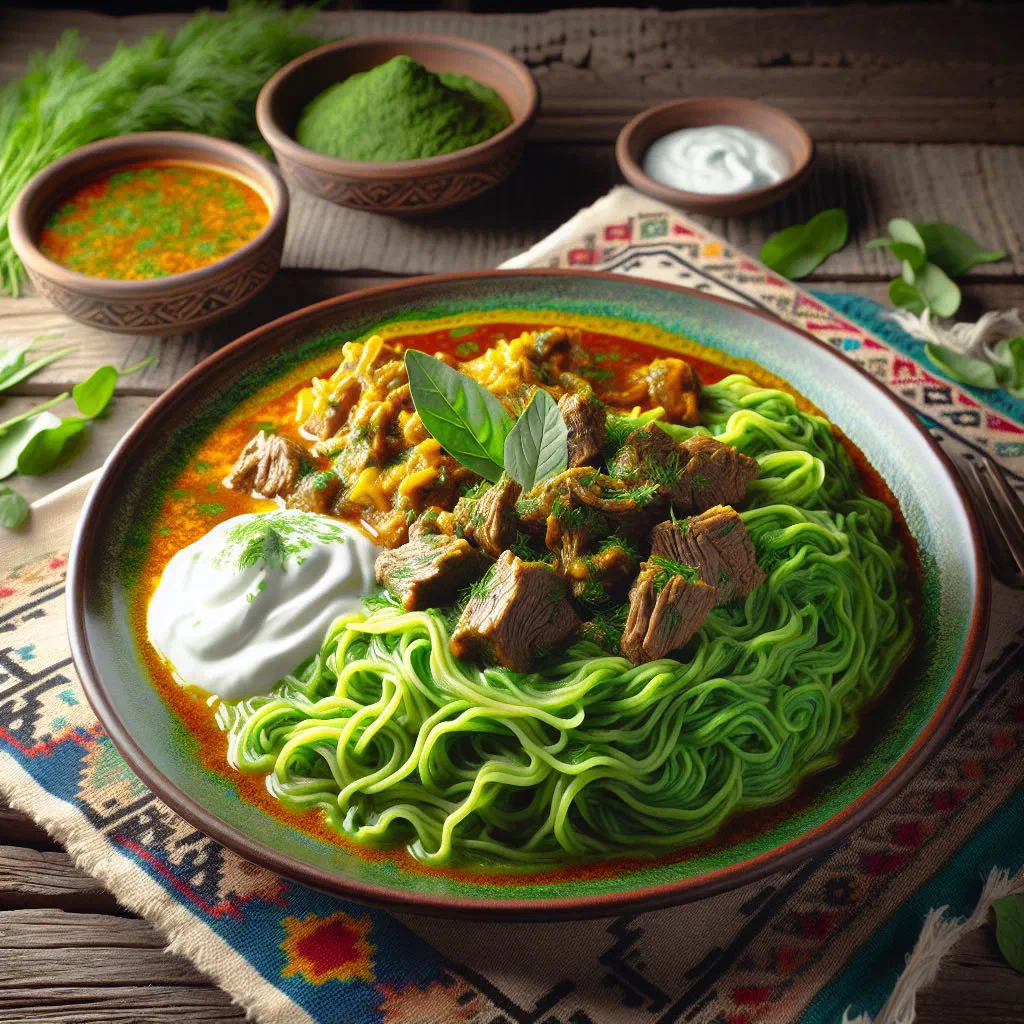
Shivit Oshi is the startling green noodle dish of Khorezm, in western Uzbekistan: pasta dough kneaded with a huge quantity of fresh dill until it turns emerald, hand-rolled, cut and steamed, then topped with a lamb, pumpkin and carrot stew and a spoonful of soured cream. It looks like nothing else in Central Asia, and it tastes as fresh as it looks.
About Shivit Oshi
Shivit Oshi are hand-pulled green dill noodles from the Khorezm region, traditionally served with a hearty meat-and-vegetable topping. The noodle dough is coloured and flavoured with fresh dill, stretched by hand and then dressed with a spiced sauce of lamb or beef, pumpkin and carrots. It is a regional speciality rather than a national staple, closely associated with the city of Khiva, where restaurants make it to order.
Ingredients (serves 1–2)
- 200 g plain wheat flour
- 1 egg
- 30 g fresh dill, finely chopped
- 50 ml water
- A pinch of salt
- 200 g lamb or beef, diced
- 100 g pumpkin, diced
- 1 carrot, cut into strips
- 1 onion, chopped
- Oil and spices, to taste
Shopping for the ingredients
You need a lot of dill, 30 g is a large bunch, and it must be fresh, since dried dill contributes neither colour nor flavour. Lamb shoulder is the traditional meat. A firm-fleshed pumpkin such as butternut holds its shape in the stew where a watery one would collapse.
Preparing the dish
Blend the dill with the water into a bright green purée, then use that liquid to make the dough. This gives a far more even colour than chopping alone. Knead the dough well and rest it for at least half an hour, which makes rolling it thin considerably easier. Start the stew first, since it takes longer than the noodles.
Step-by-step instructions
- Blend the dill with the water into a smooth green purée.
- Mix with the flour, egg and salt and knead to a firm dough; rest 30 minutes.
- Fry the onion, then brown the meat with the spices.
- Add the carrot and pumpkin and a little water; simmer 30–40 minutes until tender.
- Roll the dough out as thinly as possible and cut into narrow noodles.
- Steam the noodles in a lined steamer for 8–10 minutes (or boil briefly).
- Toss the noodles with a little oil so they do not stick.
- Serve the noodles topped with the stew, and a spoonful of soured cream if you like.
Gluten-free / lactose-free version
Skip the soured cream for a lactose-free version, the dish stands perfectly well without it. A gluten-free version requires a pasta-suitable blend with xanthan gum; the noodles will be more fragile, so cut them slightly thicker.
Tips for vegans and vegetarians
Replace the egg in the dough with an extra splash of dill water, and swap the meat for chickpeas or mushrooms in the topping, pumpkin and carrot already carry the stew. The dill noodles themselves are the highlight and lose nothing.
More tips and tricks
Rest the dough properly, or it will fight you when rolling. Steaming rather than boiling keeps the colour vivid, which is the whole visual point of the dish. And do not skimp on the dill, timidity here gives you pale noodles and a disappointing result.
Adapting the recipe to your taste
Some cooks add potato to the stew, others tomato for a redder sauce. A spoonful of suzma (strained yoghurt) on top is traditional in Khorezm. More spices, cumin, coriander, paprika, are entirely appropriate.
Ingredient substitutions
Beef, chicken or lamb all work in the topping. Butternut squash substitutes for pumpkin. Parsley can replace some of the dill, though the colour and flavour change considerably.
Drink pairing ideas
Green tea, drunk throughout the meal from small bowls, is the Central Asian constant. Ayran suits the richness of the stew. A robust red wine works if you want alcohol, though tea is far more authentic.
Serving and presentation ideas
Serve shivit oshi in wide bowls with the green noodles clearly visible beneath the stew, the contrast is the point. A dollop of soured cream or suzma on top and a scattering of extra dill finishes it. In Khiva it arrives with the stew in a separate dish so you can dress it yourself.
A bit of history
Khorezm, an ancient oasis region on the Silk Road, developed a distinct cuisine from the rest of Uzbekistan, and shivit oshi is its signature. The technique of colouring noodle dough with herbs is unusual in Central Asia and speaks to the region’s separate culinary history. It offers a genuine window onto Uzbek cuisine.
More recipe ideas
Summary: Shivit Oshi
Shivit Oshi are emerald-green dill noodles from Khorezm, steamed and topped with a lamb, pumpkin and carrot stew. Blend the dill into the dough water, rest it properly, and steam rather than boil to keep the colour.