National Dish Vietnam: Banh Beo (Recipe)
In this article
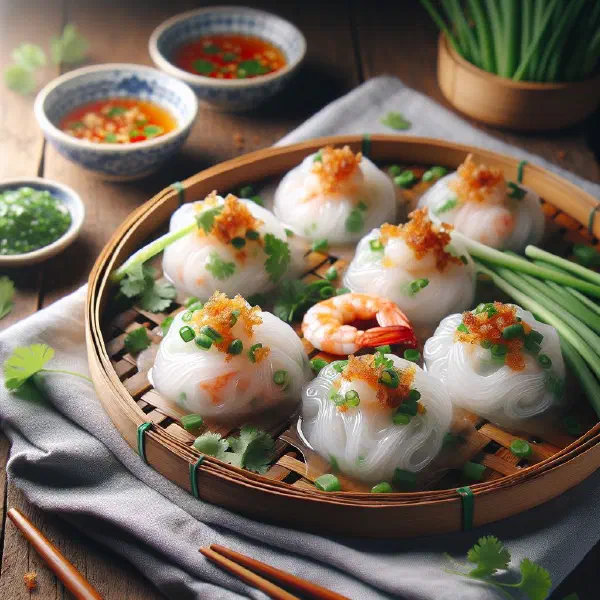
Discover Banh Beo, the delicate steamed rice cakes that count among Vietnam’s most treasured street foods. These tender little discs of rice batter are crowned with savoury dried shrimp, fried shallots and crisp pork crackling, then finished with a splash of fish sauce and a scattering of fresh herbs. Soft, springy and full of contrast, they bring the lively spirit of a central Vietnamese market stall right to your own kitchen.
About Banh Beo
Banh Beo, also known as Vietnamese rice cakes, is an iconic dish from central Vietnam. These dainty mini pancakes are made from rice flour and traditionally served with a moreish mixture of dried shrimp, shallots and crunchy pork crackling. A drizzle of fish sauce and a handful of fresh herbs round off the experience. Banh Beo is often sold as festive street food and is just as popular with locals as it is with visitors, prized for its gentle flavour and soft, yielding texture.
Ingredients (serves 1–2)
- 100 g rice flour
- 25 g tapioca starch
- 300 ml water
- ½ tsp salt
- 1 tbsp vegetable oil
- 50 g dried shrimp
- 50 g pork crackling
- 1 shallot
- Fish sauce, to taste
- Fresh herbs (such as coriander and mint)
Shopping for the ingredients
Most of the ingredients for banh beo can be found in well-stocked supermarkets or Asian grocery shops. Be sure to buy good-quality rice flour and tapioca starch so the rice cakes set with the right consistency. Dried shrimp and pork crackling are usually available in the Asian section. Fresh herbs can be picked up at your local market or, if you are lucky, snipped straight from the garden.
Preparing the dish
Before you start cooking, gather and measure out all of your ingredients. The dried shrimp should be soaked in warm water beforehand to soften them. The pork crackling can either be made from scratch or bought ready-prepared. Finely chop the shallot and fry it gently in a little vegetable oil until fragrant and golden.
Step-by-step instructions
- Mix the rice flour, tapioca starch, water and salt in a bowl until you have a smooth batter.
- Heat a steamer, or set a pan of water with a steaming insert over the hob.
- Oil small, heatproof dishes and fill each one about a third of the way with the batter.
- Steam the dishes for around 8–10 minutes, until the batter is firm and translucent.
- Meanwhile, drain the soaked dried shrimp and combine them with the fried shallots and the pork crackling.
- Once the banh beo are steamed through, spoon the shrimp mixture evenly over the top.
- Serve with a little fish sauce and a scattering of fresh herbs.
Gluten-free / lactose-free version
Banh Beo is naturally gluten-free, as it is made from rice flour and tapioca starch, which makes it ideal for anyone with a gluten intolerance. All of the other ingredients are lactose-free too, so the dish can be enjoyed without any adjustments. Simply check the label on your fish sauce to make sure it contains no unwanted additives.
Tips for vegans and vegetarians
The traditional version of banh beo contains dried shrimp and pork crackling. For a vegan variation, you can swap these out for smoked tofu and toasted onions. A mixture of chopped mushrooms and roasted nuts also makes a tasty alternative. Be sure to use a vegan fish sauce or a little soy sauce for seasoning, just as you might with the fresh herbs in Goi Cuon Tom Thit.
More tips and tricks
For especially fluffy rice cakes, add a little baking powder to the batter to give the banh beo a lighter, airier texture. You can also play around with different toppings, such as chopped peanuts or roasted garlic, to put your own stamp on the dish. Experiment with the amount of fish sauce to find the balance that suits your palate best.
Adapting the recipe to your taste
If you like a bit of heat, stir some chopped chillies into the batter or the shrimp mixture. For a lighter version, use less pork crackling or leave it out altogether. Adding different herbs such as Thai basil or dill brings extra freshness and aroma to the dish. Try a few variations to discover your own personal favourite.
Ingredient substitutions
Instead of dried shrimp, you can use fresh shrimp that have been briefly fried first. Pork crackling can be replaced with crisply fried bacon or chunks of soya protein. If tapioca starch is unavailable, cornflour will do, though the texture of the batter may differ slightly. As an alternative to fish sauce, reach for soy sauce or a mixture of lime juice and salt.
Drink pairing ideas
Banh Beo goes particularly well with light, refreshing drinks. A chilled jasmine tea or a gentle Vietnamese iced tea is a wonderful match. Sparkling water with a squeeze of lime juice makes another lovely accompaniment. For special occasions, a light white wine or a crisp sake works beautifully alongside these delicate rice cakes.
Serving and presentation ideas
Serve banh beo in small, decorative dishes to keep the traditional presentation intact. Garnish with fresh herbs and a fine drizzle of fish sauce. A little plate of extra fish sauce for dipping completes the arrangement. Fresh blooms, such as orchids or lotus flowers, add an elegant finishing touch to the table.
A bit of history
Banh Beo originally comes from the Hue region of central Vietnam, a former imperial capital. The dish reflects the influence of royal Vietnamese cooking, renowned for its distinctive elegance and refinement. In times past, banh beo was often served at festive occasions and royal banquets. Today it is a beloved example of street food, found at countless markets and restaurants and a charming introduction to Vietnamese cuisine.
More recipe ideas
Summary: Banh Beo
Banh Beo is a versatile and flavourful dish that adapts easily to different tastes and dietary needs. From its naturally gluten-free and lactose-free preparation to vegan and vegetarian variations, banh beo offers a wide range of options. With just a few simple ingredients and a little preparation, you can recreate and enjoy this traditional Vietnamese classic in your very own kitchen.