National Dish Vietnam: Banh Da Cua (Recipe)
In this article
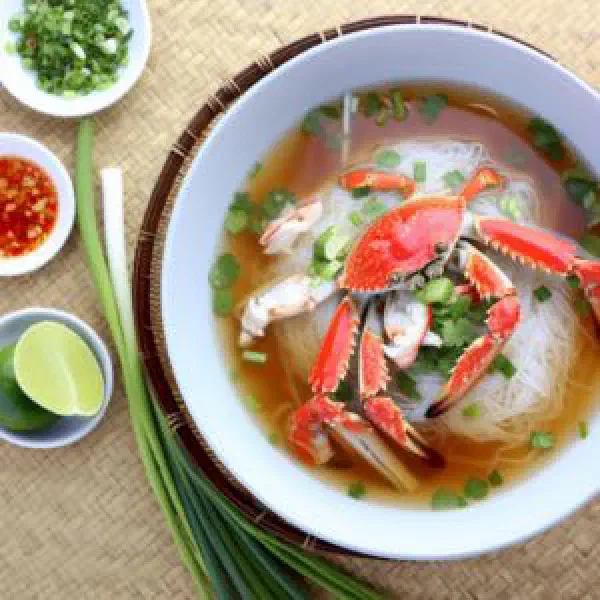
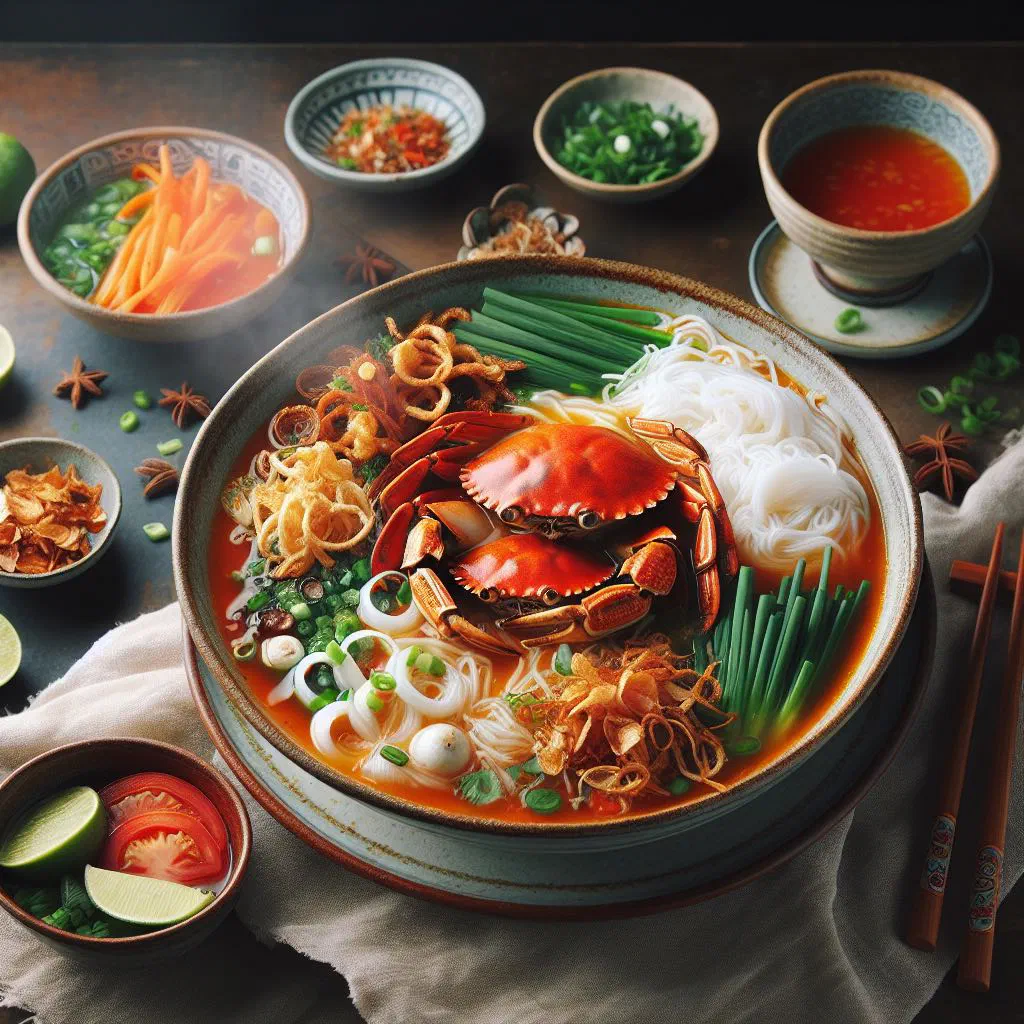
Meet Banh Da Cua, a fragrant crab noodle soup that captures the spirit of Vietnam’s coast in a single bowl. Tender crab meat, slippery rice noodles and a savoury broth come together with armfuls of fresh herbs and a whisper of chilli. It is the kind of dish that feels both comforting and refined, and it offers a wonderful way to bring authentic Vietnamese flavours into your own kitchen.
About Banh Da Cua
Banh Da Cua is a traditional Vietnamese dish that stands out for its inviting blend of fresh ingredients and aromatic flavours. The soup has its roots in Vietnam’s coastal regions, where the catching and cooking of seafood plays a central role in daily life. At its heart sits tender crab meat, brought together with a savoury broth and fresh rice noodles. More than a feast for the senses, it is a perfect way to experience Vietnamese food culture at first hand.
Ingredients (serves 1–2)
- 200 g fresh crab meat
- 150 g rice noodles
- 1 litre fish stock
- 1 small onion, chopped
- 2 garlic cloves, chopped
- A bunch of fresh coriander
- 2–3 lime leaves
- Chilli, to taste
- Fish sauce and salt, to season
- A few fresh mint leaves, to garnish
Shopping for the ingredients
To prepare banh da cua, it really pays to use fresh, good-quality ingredients. Most of what you need should be available at Asian grocery shops or at market stalls. Pay particular attention to freshness when buying the crab meat, as this has a marked effect on the flavour of the finished dish. The remaining ingredients, such as rice noodles, fish stock and fresh herbs, can usually be found in any well-stocked supermarket.
Preparing the dish
Before you start cooking banh da cua, take a little time to prepare everything carefully. The rice noodles need to soak in water for around 30 minutes so they turn soft and just right for the soup. Meanwhile, you can clean the crab meat and cut it into smaller pieces to improve its texture. The onion and garlic should also be chopped and set aside, ready to keep the cooking process moving along smoothly.
Step-by-step instructions
- Bring the fish stock to the boil in a large pan.
- Add the onion and garlic and let them simmer for 3–4 minutes until fragrant.
- Stir in the freshly prepared crab meat and mix everything together well.
- Add the soaked rice noodles and cook for a further 5 minutes.
- Season with fish sauce, salt and chilli to taste.
- Drop in the lime leaves and let the soup steep over low heat for about 2 minutes.
- Garnish with fresh herbs just before serving.
Gluten-free / lactose-free version
For a gluten-free version of banh da cua, simply make sure the rice noodles you use are completely free from gluten. Many brands offer dedicated gluten-free varieties that work beautifully in this soup. Keep an eye on the fish sauce too, as some brands contain wheat. The soup is naturally lactose-free, so with these small adjustments the dish becomes accessible to everyone who needs to avoid gluten or lactose.
Tips for vegans and vegetarians
Although banh da cua is traditionally made with crab, you can easily create a vegan or vegetarian version by swapping the crab meat for a mix of tofu or vegetables. Firm tofu can be cut into small pieces and simmered in the broth to achieve a similar texture. Instead of fish sauce, use a blend of soy sauce and a little lime juice to recreate that savoury umami note. With fresh vegetables and herbs, the soup stays every bit as delicious and appealing.
More tips and tricks
To deepen the aroma of banh da cua even further, you can enrich the broth with a few spices such as ginger and star anise. These additions bring an extra layer of flavour to the soup. Frying the onion and garlic before adding them to the broth also intensifies the taste. Feel free to experiment with different herb combinations to shape the soup to your own liking, much like the fragrant broth that defines a bowl of Pho Ga.
Adapting the recipe to your taste
One of the great strengths of banh da cua is how flexible it is to prepare. You can adjust the amount of crab meat to suit your taste, or even add extra seafood such as prawns or fish. Alternatively, fold in vegetables like carrots or pak choi to make the dish more substantial. This lets you tailor the recipe to your own preferences or to whatever is in season.
Ingredient substitutions
If you cannot find some of the traditional ingredients, there are always alternatives to hand. Instead of fresh crab meat, you can use tinned crab or even a good-quality fish sauce to carry the flavour. A vegetable stock works well in place of the fish stock if you prefer a vegetarian option. The rice noodles can also be swapped for other varieties such as udon, though you will need to adjust the cooking time to reach the right consistency, a flexibility shared by noodle soups like Hu Tieu Nam Vang.
Drink pairing ideas
A range of drinks pairs nicely with banh da cua and complements the flavours of the soup. A light Asian lager makes a refreshing companion, while a glass of green tea or jasmine tea underlines the soup’s aromas beautifully. If you prefer something a touch sweeter, a fruity house cocktail with lime and mint is a refreshing choice. These options offer an appealing balance to the savoury character of the dish, and round off a meal alongside lighter bites such as Goi Cuon Tom Thit.
Serving and presentation ideas
The way you present banh da cua can lift the whole dining experience. Serve the soup in deep, white bowls to show off the vivid colours of the ingredients. Garnish with fresh herbs and a wedge of lime resting on the side for an extra touch of colour. Arranging the noodles and crab meat thoughtfully in the bowl is another way to please your guests and heighten the pleasure of the meal.
A bit of history
Banh da cua is not merely a dish but a piece of Vietnamese cultural history. Its reliance on fresh seafood reflects the country’s geography, surrounded as it is by water. The soup has evolved over time and is now a popular choice in many households and restaurants alike. Preparing it is often a sociable affair, bringing families together to enjoy the delicious flavours of Vietnamese cuisine.
More recipe ideas
Summary: Banh Da Cua
Banh da cua is a true highlight of Vietnamese cuisine, pleasing with fresh ingredients and distinctive flavours. The combination of crab meat, rice noodles and a rich broth creates a dish that is as nourishing as it is full of flavour. With the right preparation and a few simple tweaks, anyone can enjoy this soup, whether vegan, vegetarian or traditional. Let the flavours of Vietnam inspire you and savour this hearty bowl in your own kitchen.