National Dish Vietnam: Banh It Tran (Recipe)
In this article
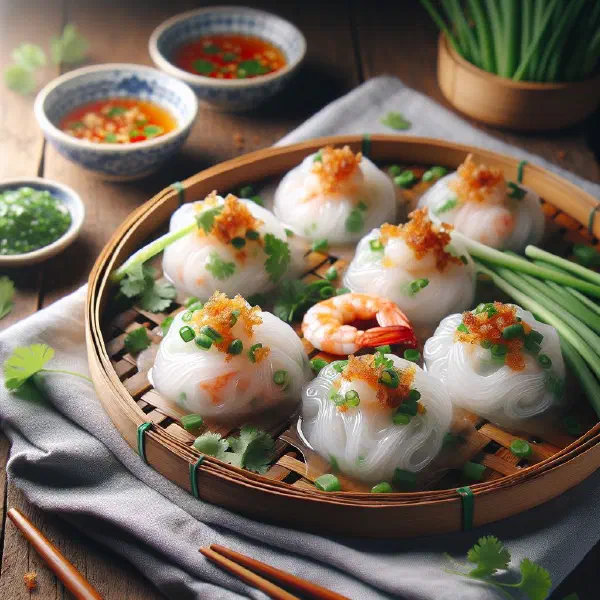
Discover Banh It Tran, one of Vietnam’s most appealing little rice cakes. Behind a soft, almost translucent shell hides a savoury heart of prawns and pork belly, perfumed with garlic and spring onion. Long a fixture at festivals and family celebrations, these dainty parcels are pure comfort food and far easier to make at home than they look. Let this gem of Vietnamese cuisine bring a little of the country’s festive spirit to your own table.
About Banh It Tran
Banh It Tran is a traditional glutinous rice cake from Vietnam, filled with delicious combinations such as prawns and pork. It is hugely popular across the country and is often served at large festivals and celebrations. The contrast between the soft, chewy rice dough and the hearty filling makes it a very good highlight. Originating in central Vietnam, it remains a much-loved part of the country’s culinary heritage and is wonderfully satisfying as a snack or starter.
Ingredients (serves 1–2)
- 200 g glutinous rice flour
- 100 g tapioca flour
- 150 g prawns, peeled and deveined
- 100 g pork belly, finely diced
- 1 medium onion, finely chopped
- 2 garlic cloves, chopped
- Spring onions, chopped
- Salt and pepper, to taste
- Oil, for frying
- Fish sauce, to serve
Shopping for the ingredients
The first step in making banh it tran is sourcing all of the ingredients. Look out for fresh prawns and good-quality pork. Glutinous rice flour and tapioca flour can be found in Asian grocery shops or ordered online, while the remaining ingredients such as onion, garlic and spring onions are easy to pick up in any supermarket. As with a delicate Banh Bo, the quality of your flour really does make a difference to the finished cake.
Preparing the dish
Before you start cooking, it pays to get everything ready. Peel and devein the prawns, then cut the pork belly into small dice. Finely chop the onion, garlic and spring onions. Measure out the glutinous rice flour and tapioca flour and keep everything within reach so the next steps run smoothly. A tidy, well-organised work surface makes shaping the cakes far more relaxed.
Step-by-step instructions
- Heat a little oil in a pan and sauté the onion and garlic until fragrant.
- Add the prawns and pork belly and fry until cooked through, then season with salt and pepper.
- Tip the glutinous rice flour and tapioca flour into a bowl and knead with a little warm water to a smooth dough.
- Divide the dough into small portions and flatten each one. Place a tablespoon of the filling in the centre and seal the dough around it.
- Steam the finished banh it tran for about 10–15 minutes, until the dough turns translucent.
Gluten-free / lactose-free version
This recipe is naturally gluten-free, since both glutinous rice flour and tapioca flour contain no gluten. When buying your ingredients, simply check that there has been no cross-contamination with gluten-containing products. As the dish uses no dairy at all, it is also lactose-free, making it an easy crowd-pleaser for guests with dietary needs.
Tips for vegans and vegetarians
For a vegan or vegetarian version, swap the prawns and pork for tofu or a selection of vegetables such as carrots and mushrooms. The method stays exactly the same, and you end up with an equally tasty, lighter alternative. As ever, season to taste, a generous splash of soy sauce or a vegetarian fish sauce helps keep that savoury depth.
More tips and tricks
One of the most important tricks with banh it tran is getting the dough just right. It should be smooth and elastic without sticking to your hands. If it feels too dry, work in a little more warm water; if it is too sticky, add a touch more flour. Don’t be discouraged if your first few cakes look uneven, practice really does make perfect.
Adapting the recipe to your taste
You can tailor the filling entirely to your own preferences. Experiment with different ingredients such as chicken, mushrooms or even beans, and feel free to vary the seasonings to suit your palate. The same playful spirit shines in fritters like Banh Bot Chien, where the basic idea welcomes endless variation.
Ingredient substitutions
If you cannot find glutinous rice flour or tapioca flour, plain rice flour will work, though the texture will be a little different. Cornflour or another starch makes a reasonable stand-in for tapioca flour. Whatever you choose, reach for good-quality ingredients for the best result, the same care that gives a steamed bun like Banh Bao Chay its pillowy bite.
Drink pairing ideas
Banh it tran is at its best alongside refreshing drinks. A traditional Vietnamese green tea is an excellent choice, while coconut water or a light white wine also pair beautifully. Try a few combinations and settle on your own favourite, and if you fancy something indulgent afterwards, a rich Ca Phe Trung makes a memorable finish.
Serving and presentation ideas
Presentation matters a great deal when serving banh it tran. Arrange the rice cakes on a traditional Vietnamese bamboo tray or a stylish plate for maximum effect. Garnish with chopped spring onions and a drizzle of fish sauce. As they say, we eat with our eyes first, so a little attention to the finishing touches goes a long way.
A bit of history
Banh it tran has a long history in Vietnamese cooking and has been prepared for many generations. The dish originally comes from central Vietnam and is traditionally served on special occasions and at celebrations. It is said to symbolise good fortune and family togetherness, and it remains a firmly rooted part of Vietnamese culture, a tradition shared with festive treats like Banh Com.
More recipe ideas
Summary: Banh It Tran
Banh it tran is a traditional Vietnamese dish that is simple to make yet wonderfully delicious. The pairing of soft, chewy rice dough with a hearty filling makes it a highlight of any meal. With fresh ingredients and a little practice, it can easily become a regular part of your own cooking. Give it a go and enjoy a piece of Vietnamese culture at home. It is a good introduction to Vietnamese cuisine.