National Dish Vietnam: Bun Rieu (Recipe)
In this article
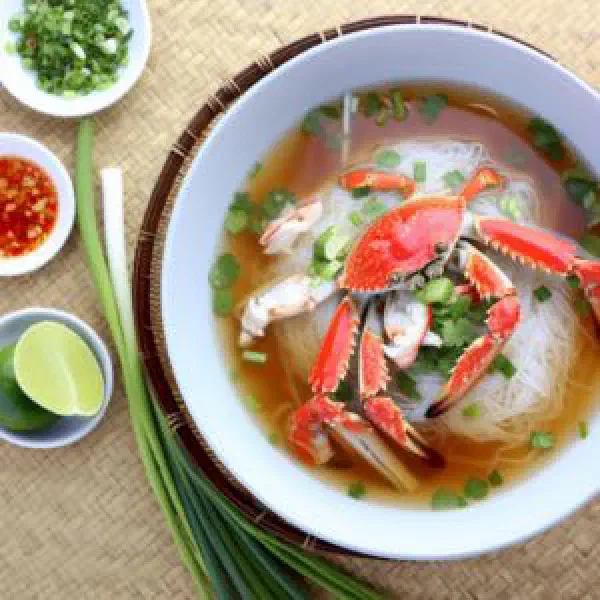
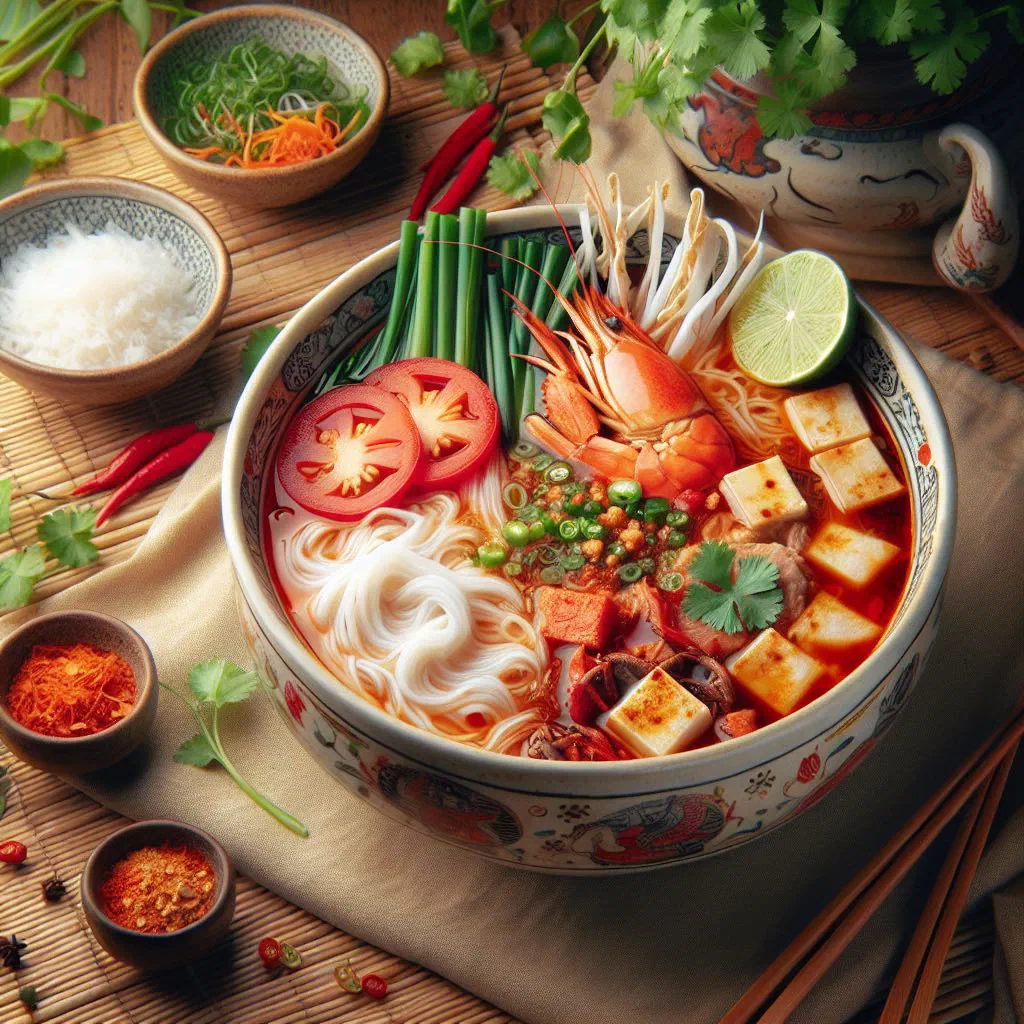
Discover Bun Rieu, a bright Vietnamese noodle soup that is both hearty and wonderfully refreshing. This bowlful brings together tender rice noodles and a tangy, tomato-rich broth brightened with crab and a handful of fresh herbs. Light yet deeply savoury, it is a dish enjoyed at celebrations and everyday meals alike across Vietnam. Bring the lively flavours of a Hanoi street kitchen straight to your own table.
About Bun Rieu
Bun Rieu is a classic Vietnamese noodle soup that manages to be both savoury and refreshing at once. The dish pairs tender rice noodles with a delicious tomato broth that is rich in flavour and gently tangy. Fresh ingredients such as crab and a generous mix of herbs make every bowl an one-of-a-kind tasting experience. In Vietnam, Bun Rieu is a much-loved staple, served just as readily at festive gatherings as it is for an everyday meal.
Ingredients (serves 1–2)
- 200 g rice noodles
- 500 ml vegetable or fish stock
- 200 g crab meat or crab paste
- 2 ripe tomatoes, diced
- 1 onion, finely chopped
- 1–2 cloves garlic, crushed
- Fresh herbs (such as Thai basil and coriander)
- 1–2 tablespoons fish sauce
- A squeeze of lime juice
- Optional: chilli, for heat
Shopping for the ingredients
When shopping for the ingredients for Bun Rieu, it pays to choose fresh, good-quality produce. An Asian grocery or a well-stocked international aisle is the best place to find what you need. The rice noodles are a must-have, so make sure they are gluten-free and genuinely rice-based. The crab meat should be as fresh as possible too, to let the full flavour of the dish shine through.
Preparing the dish
Preparing Bun Rieu involves a few simple steps that can make all the difference to the final flavour. Begin by soaking the rice noodles in warm water until they soften. While they steep, you can get on with preparing the tomatoes and onion. Wash the herbs well and set them aside for later, as they lift the finished dish considerably.
Step-by-step instructions
- Bring the vegetable or fish stock to the boil in a large pan.
- Add the diced tomatoes and the chopped onion, and let the mixture simmer for about 10 minutes.
- Stir in the crab paste or crab meat and mix well.
- Add the soaked rice noodles to the soup and let everything simmer gently.
- Season the soup with fish sauce, lime juice and, if you like, a little chilli to taste.
- Serve the soup piping hot, garnished with fresh herbs.
Gluten-free / lactose-free version
Making Bun Rieu gluten-free is simple. Choose dedicated gluten-free noodles made from rice so the dish suits anyone with a gluten intolerance. For a lactose-free version, just check that all the stocks and seasonings you use are free from dairy. It is worth reading the labels before you shop to be sure everything fits your dietary needs. That way even those with allergies can enjoy this delicious soup.
Tips for vegans and vegetarians
For a vegan or vegetarian take on Bun Rieu, swap the crab meat for tofu or another plant-based protein. Use a vegetable stock as the base and make sure every seasoning you reach for is vegan too. Mushrooms also make an excellent stand-in for the crab, lending the soup a similar savoury depth. Plenty of fresh herbs and vegetables take the dish to another level and keep it light and easy to enjoy.
More tips and tricks
To deepen the flavour of Bun Rieu, try roasting the vegetables briefly before adding them to the soup. Experiment with different herbs and spices to give the dish your own signature touch. A scattering of roasted peanuts on top adds a lovely crunchy contrast. Don’t forget to play with the garnishes too, lime wedges or fresh chilli, for instance, depending on your mood and taste.
Adapting the recipe to your taste
Everyone has their own preferences when it comes to Bun Rieu. Those who like things hotter can add extra chillies or a dash of hot sauce, while a milder bowl simply calls for fewer spices. Adjust the ratio of broth to noodles to reach the consistency you prefer. By tasting and tweaking the ingredients, you can dial in the perfect version for yourself.
Ingredient substitutions
If you would rather not use crab, or have an allergy, prawns or other seafood make a fine substitute. For the broth, chicken or beef stock both work well as alternatives. You can vary the vegetables too, depending on the season and what is available, pak choi or spinach slip in beautifully, much like the greens that brighten a bowl of Bun Oc Chuoi Dau. This flexibility makes Bun Rieu a wonderfully adaptable dish that everyone can enjoy.
Drink pairing ideas
A range of drinks pairs beautifully with Bun Rieu to round off the experience. A light, ice-cold Asian beer harmonises wonderfully with the soup’s bright flavours. A refreshing unsweetened iced tea is another fine match. If you fancy something fruity, a fresh mango juice rounds everything off nicely, or treat yourself to a Ca Phe Trung afterwards for a sweet finish.
Serving and presentation ideas
The way you present Bun Rieu can add a great deal to its appeal. Serve the soup in a large, deep bowl, garnished with fresh herbs and perhaps a few edible flowers. A couple of lime wedges on the side and some hot chillies frame the dish handsomely. Colourful bowls and cutlery lift the whole picture and turn any meal into a special occasion.
A bit of history
Bun Rieu has its roots in Vietnamese culture, blending elements from several regional cuisines. The soup was often served in Nam Dinh province, known for its diverse flavours and its fine marriage of land and sea. The use of fresh, local ingredients helped build the popularity of Bun Rieu, which eventually won recognition abroad as well. Today people around the world savour the delicious, aromatic character of this traditional soup, a proud example of Vietnamese cuisine.
More recipe ideas
Summary: Bun Rieu
In short, Bun Rieu is a delicious and versatile Vietnamese noodle soup that is easy to put together at home. With its combination of rice noodles, tangy tomato broth and fresh seafood, it offers a truly wonderful tasting experience. There are countless ways to make this traditional dish your own. Explore its many variations and let your creativity loose in the kitchen.