National Dish Vietnam: Canh Mit Non (Recipe)
In this article
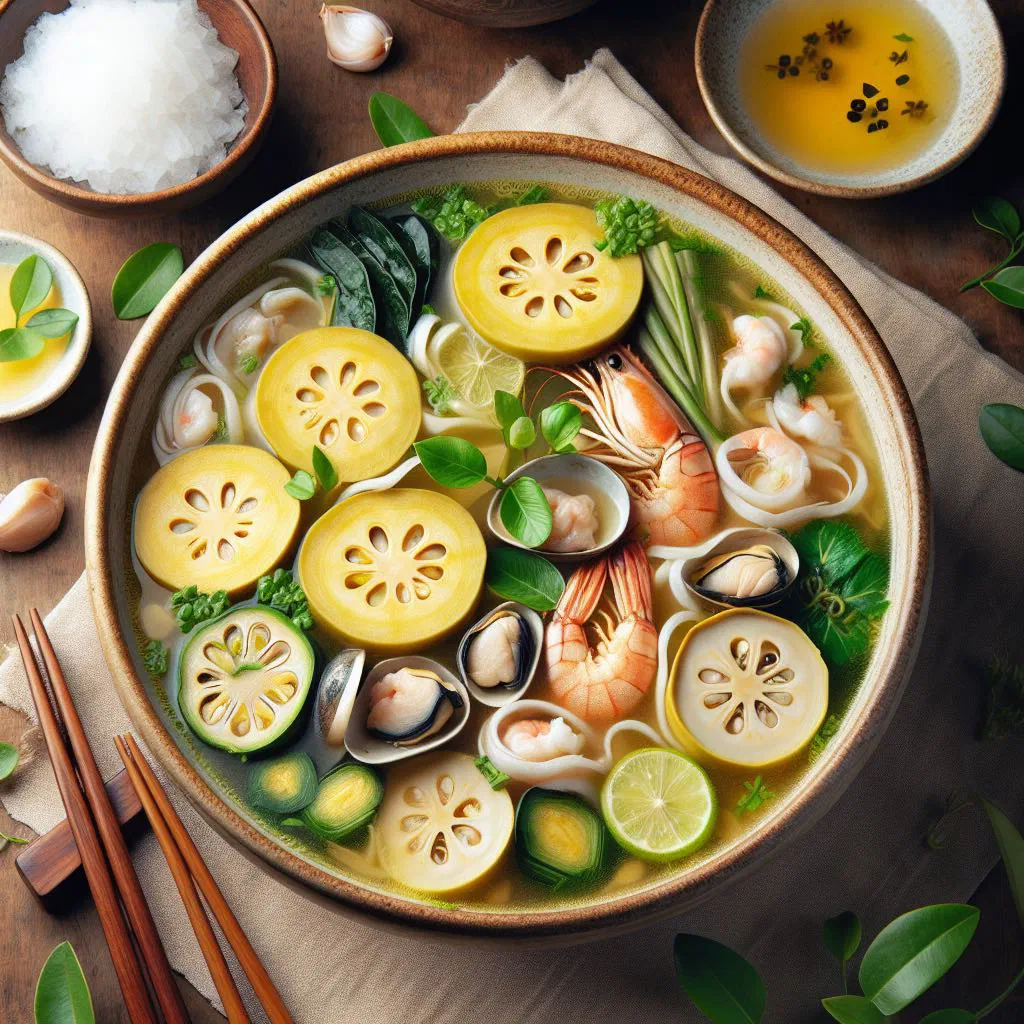
Meet Canh Mit Non, a fragrant Vietnamese soup that brings together tender young jackfruit and a generous handful of fresh herbs. Gently sweet, lightly savoury and brightened with a squeeze of lime, it is the kind of bowl that feels both nourishing and refreshing. With its delicate broth and aromatic finish, this dish offers a wonderful introduction to the lighter side of Vietnamese cooking, easy to make and endlessly welcoming.
About Canh Mit Non
Canh Mit Non is a traditional Vietnamese dish that stands out for its exotic aromas and its use of fresh jackfruit. This delicious soup pairs the natural sweetness of the jackfruit with a variety of fresh herbs and other ingredients typical of Vietnamese cooking. The blend of sweet, savoury and gently spiced notes creates a flavour experience all its own. Enjoy this fusion of aromas and explore the rich culture of Vietnam with every spoonful, much as you would with a comforting bowl of Pho Ga.
Ingredients (serves 1–2)
- 200g jackfruit (fresh or tinned)
- 1 litre vegetable stock
- 1 onion, diced
- 2 cloves garlic, chopped
- 1 piece of ginger (about 3 cm), sliced
- Fresh herbs (basil, coriander, mint)
- 2 tablespoons fish sauce (or soy sauce for vegans)
- Juice of 1 lime
- Chillies, to taste
Shopping for the ingredients
Before you start making Canh Mit Non, it is worth gathering all the ingredients you need. Many of them can be found in Asian grocery shops or well-stocked supermarkets. Jackfruit in particular can be tricky to find fresh, but a tinned version makes a practical and tasty alternative. Invest in fresh herbs and spices, as they are key to the flavour success of the dish.
Preparing the dish
Preparing Canh Mit Non is fairly straightforward and takes only a few simple steps. Begin by cutting the jackfruit into small pieces if you are using fresh. Chop the onion and garlic finely too, so their aromas develop fully when sautéed. The fresh herbs should be washed and roughly chopped, so they release their freshness and flavour into the soup at just the right moment.
Step-by-step instructions
- Heat a little oil in a large pan and add the onion and garlic. Sauté for around 2–3 minutes until golden brown.
- Add the ginger slices and the jackfruit, and cook everything together for a further 5 minutes.
- Pour the vegetable stock into the pan and bring the mixture to the boil.
- Reduce the heat and let the soup simmer for 15 minutes, so the flavours can develop.
- Season with fish sauce or soy sauce, then add the lime juice and the fresh herbs. Stir well and let the dish rest for about 5 minutes.
Gluten-free / lactose-free version
Canh Mit Non is naturally a dish that adapts well to special dietary needs. To make a gluten-free version, simply use gluten-free soy sauce instead of fish sauce. A lactose-free version is easy too, since the soup relies on fresh vegetables and herbs throughout, with no dairy involved. This makes the dish well suited to anyone with food intolerances.
Tips for vegans and vegetarians
For a vegan or vegetarian take on Canh Mit Non, simply swap the fish sauce for soy sauce or another plant-based alternative. Be sure to choose a vegetable stock that is vegan too. You can also enrich the soup with extra vegetables such as carrots or courgette to boost its nutritional value. Finish the dish with a splash of lime juice and fresh herbs for the ultimate flavour experience, just as you might with Goi Cuon Tom Thit.
More tips and tricks
To enjoy the full flavour of Canh Mit Non, use the freshest ingredients you can. Fresh herbs are the key to a successful dish; they bring the aromas to life. Experiment with different vegetables to vary the soup to your taste. Playing with the spices and adjusting the heat turns this soup into a thoughtful, satisfying experience.
Adapting the recipe to your taste
Canh Mit Non is wonderfully easy to tailor to your personal preference. You might reduce or increase the amount of chilli to reach your desired level of heat. Adding tofu or other plant proteins can also make the dish more nutritious. That way it becomes more interesting in flavour and better suited to your own tastes.
Ingredient substitutions
If certain ingredients are not to hand, there are plenty of alternatives for Canh Mit Non. In place of jackfruit, you could use ripe banana or other fruit if you fancy experimenting with flavours. Fish sauce can be replaced with tamari or another savoury sauce. This keeps you flexible and lets you make the recipe with regional ingredients too.
Drink pairing ideas
The right drinks help round off Canh Mit Non perfectly. A fresh, sparkling drink or a simple green tea pairs beautifully with the soup. If you prefer something fruitier, a glass of fresh lime juice can be served alongside to lift the aromas. A light beer also works nicely for a relaxed, sociable evening.
Serving and presentation ideas
The presentation of Canh Mit Non is just as important as the dish itself. Use deep, colourful bowls to show off the fresh ingredients to their best. Decorate the soup with extra fresh herbs and a splash of lime for an added touch of colour. Stylish tableware can lift the experience further and turn the meal into a festive occasion.
A bit of history
Canh Mit Non has its origins in Vietnam and is a fine example of the diversity of Vietnamese cooking. Traditionally it is often served at special occasions and family gatherings. Its roots lie in local ingredients and customs passed down from generation to generation. This soup is a piece of Vietnamese culture, embodying the values of coming together and sharing, much like the celebrated Heo Quay of Vietnamese cuisine.
More recipe ideas
Summary: Canh Mit Non
Canh Mit Non is a distinctive Vietnamese dish that appeals to with its unique combination of jackfruit and fresh herbs. Its simple preparation and the ease with which it can be adapted to personal taste make it a great choice for anyone keen on Asian cooking. With the right ingredients and a few presentation tricks, you can bring a piece of Vietnamese culture into your own kitchen. Let it inspire you and enjoy a warm, hearty treat.