National Dish Vietnam: Cha Gio (Recipe)
In this article
Meet Cha Gio, Vietnam’s very good crispy spring rolls and one of the country’s most cherished dishes. Encased in a delicate, golden shell and packed with a savoury filling of pork, prawns and vegetables, they deliver the perfect contrast of crunch and tenderness in every bite. Fragrant with herbs and a splash of fish sauce, these little parcels are as at home at a festive table as they are as a moreish snack. Roll up your sleeves and bring a taste of Vietnam into your own kitchen.
About Cha Gio
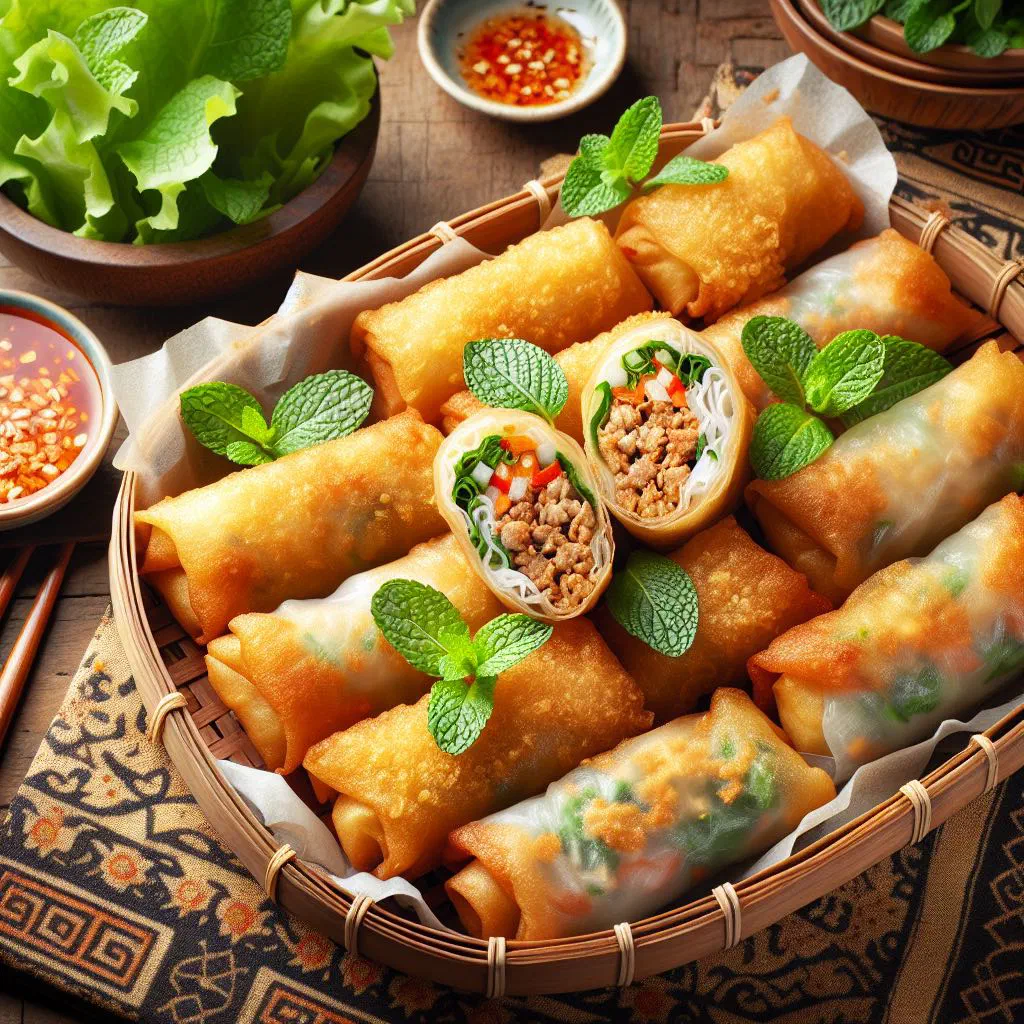
Cha Gio, also known as Vietnamese spring rolls, is a national dish deeply rooted in the culinary tradition of Vietnam. These are crisply fried rolls that can be filled with a wide variety of ingredients, including but not limited to pork, prawns, glass noodles and vegetables. Characterised by their golden-brown shell and a filling enriched with aromatic herbs and spices, they reflect the rich flavour palette of Vietnam. Their popularity stretches far beyond the country’s borders, making them a globally appreciated dish. What makes cha gio so special is the unique taste and the interplay of textures: the crispness of the shell in perfect contrast to the tender filling.
Ingredients (serves 1–2)
- 200g minced pork
- 100g prawns, finely chopped
- 50g glass noodles, soaked and cut into small pieces
- 1 carrot, grated
- 1 onion, finely diced
- 2 cloves garlic, finely chopped
- 1 egg, beaten
- 1 tablespoon fish sauce
- 1 bunch spring onions
- Black pepper, ground
- 8–10 rice paper sheets
- Oil for frying
- Fresh herbs, to serve
Shopping for the ingredients
When preparing cha gio, it is worth choosing fresh, high-quality ingredients. The pork and prawns in particular should be of good quality. Rice paper sheets and glass noodles are usually easy to find at an Asian grocery or a well-stocked supermarket. When buying rice paper, check its condition: it should be flexible and free of cracks so that it rolls neatly without tearing.
Preparing the dish
Before you start making cha gio, it pays to chop and lay out all your ingredients in advance, as this makes the whole process far smoother. The glass noodles need to be soaked and cut into smaller pieces. Grating the carrot and finely dicing the onion helps them spread evenly through the filling and stops them falling out during frying. A well-organised work surface lets you work at a relaxed, steady pace.
Step-by-step instructions
- Combine the minced pork, prawns, glass noodles, carrot, onion, spring onions, garlic, egg, fish sauce and pepper in a large bowl.
- Briefly soak the rice paper sheets in warm water until they turn soft and pliable.
- Place a sheet of rice paper on a clean surface and add a suitable amount of the filling.
- Fold in the sides of the rice paper and roll it up tightly to form a spring roll. Repeat with the remaining filling and rice paper.
- Heat the oil in a pan or pot and fry the cha gio until golden-brown and crisp, then drain on a plate lined with kitchen paper to remove excess oil.
Gluten-free / lactose-free version
Cha gio is naturally well suited to a gluten-free diet. Simply make sure to use gluten-free rice paper and a gluten-free fish sauce, as some brands contain wheat. The recipe contains no dairy, so it is already lactose-free as it stands. With these small checks, everyone can enjoy these crispy rolls without compromising on the ingredients.
Tips for vegans and vegetarians
Cha gio adapts beautifully to a vegetarian or vegan table. Leave out the pork and prawns and bulk up the filling with a larger quantity of vegetables; tofu is a popular and satisfying alternative. Swap the fish sauce for a plant-based soy or vegan fish sauce, and use a little cornflour paste in place of the egg to seal the rolls. Fresh herbs remain the key to an authentic flavour, so reach for seasonal produce wherever you can.
More tips and tricks
To make sure the spring rolls do not fall apart while frying, brush the end of each roll with a little beaten egg before sealing it completely. It acts just like glue. When frying, take care not to overcrowd the pan, as the oil temperature will drop too sharply and the rolls can turn greasy. Frying in small batches keeps the shell light, crisp and beautifully golden.
Adapting the recipe to your taste
Cha gio can be varied entirely to suit your own taste. If you prefer it vegetarian, replace the pork and prawns with a greater quantity of vegetables. You can also experiment with the filling by adding different kinds of vegetables or mushrooms. A pinch more pepper or a dash of chilli lets you dial the heat up to your liking, so you can create a roll that fits your palate exactly.
Ingredient substitutions
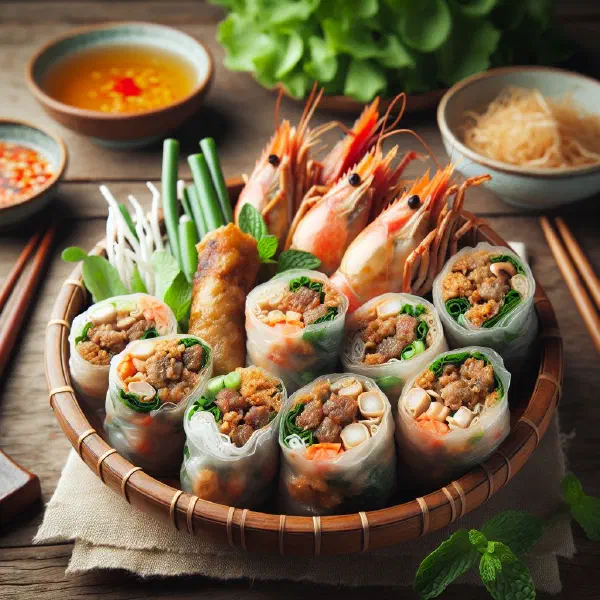
If you dislike prawns or are allergic to them, you can simply increase the amount of pork or swap it for chicken. The same juicy, marinated pork shines in Banh Trang Cuon Thit Heo, so it makes a reliable stand-in here too. For a gluten-free version, take care to use gluten-free rice paper and gluten-free fish sauce. Substitutions like these help you adapt the recipe to what is in season or to your own preferences.
Drink pairing ideas
A light white wine or a cool lager makes an ideal companion to these crispy rolls. For non-alcoholic options, freshly pressed juices or green tea work wonderfully, their freshness balancing the rich, savoury flavours of the dish. A round of cha gio also pairs well with the silky, indulgent Ca Phe Trung to finish the meal on a sweet note.
Serving and presentation ideas
Serve the cha gio on a bed of fresh lettuce leaves and herbs for a bright, inviting spread. Accompany the dish with dips such as nuoc cham, a Vietnamese fish sauce with lime juice, sugar, water and chopped chilli, or a sweet-and-sour sauce. Arranging the rolls neatly alongside the dipping bowls turns a simple snack into a proper centrepiece, much like the fresh, rolled-to-order Goi Cuon Tom Thit.
A bit of history
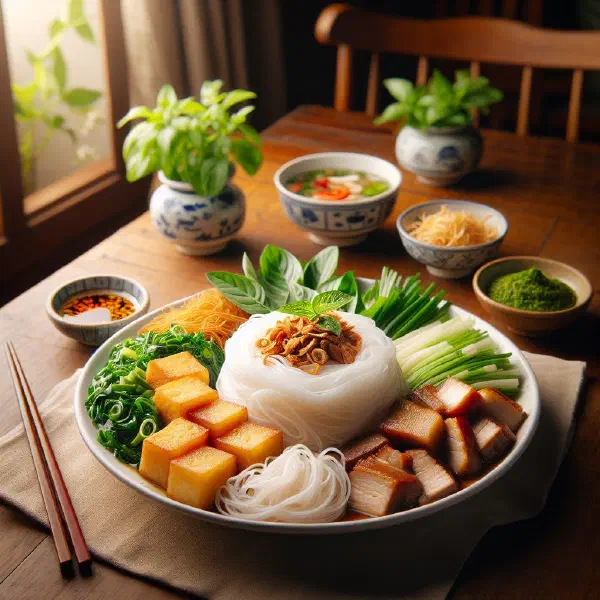
Cha gio is a classic of Vietnamese cuisine with a long tradition. The dish originally came from China but, over time, it evolved and took on regional Vietnamese influences. This story of origin is reflected in the varied filling and the fresh accompaniments that are so typical of Vietnamese cooking. Today it stands proudly alongside other beloved staples such as the aromatic noodle soup Pho Tai, a testament to how the cuisine blends outside influences with home-grown flavour.
More recipe ideas
Summary: Cha Gio
Cha gio is more than just a dish; it is a culinary experience that captures the flavour and culture of Vietnam. With its crisp golden shell and tender, savoury filling, it is an absolute treat for the senses. Cha gio brings warmth and flavour to any table. Let this Vietnamese classic inspire you and give it a try, your taste buds will thank you.