National Dish Vietnam: Pho (Recipe)
In this article
Pho is broth. Everything else in the bowl is assembly. A good pho broth takes six hours and a bad one takes twenty minutes, and you can taste the difference immediately, which is why the dish is hard to fake.
About Pho
Beef bones, charred onion and ginger, and a small set of spices: star anise, cassia, cloves, cardamom, coriander seed. Nothing more. The broth should be clear, not cloudy, and taste of beef first and spice second.
Char the onion and ginger directly over a flame until blackened in patches. That is not optional and it is what gives pho its particular smell.
Ingredients (serves 1–2)
For the broth:
- 2 kg beef bones
- 1 kg beef (on the bone)
- 2 onions, halved
- 5 slices fresh ginger
- 4 star anise
- 4 cloves
- 2 cinnamon sticks
- 2 cardamom pods
- 1 tablespoon coriander seeds
- 4 tablespoons fish sauce
- 2 tablespoons sugar
- Salt to taste
For the bowl:
- 400 g rice noodles (pho noodles)
- 300 g beef (raw, thinly sliced)
- Fresh herbs (Thai basil, coriander, mint)
- Spring onions, sliced into rings
- 2 limes, cut into wedges
- 2 chillies (optional, sliced into rings)
- Bean sprouts
- Hoisin sauce and sriracha, to serve
Shopping for the ingredients
Marrow and knuckle bones from a butcher, plus oxtail if you can. Flat rice noodles, banh pho, fresh if your Asian grocer has them. Good fish sauce, which means a high anchovy percentage and no added sugar. Thai basil, not Italian.
Preparing the dish
Parboil the bones and rinse them, which is the step that gives a clear broth. Char the onion and ginger under a grill or over a gas flame. Toast the spices dry before they go in. Then simmer, never boil, for at least four hours.
Step-by-step instructions
- Cover the bones with water, bring to the boil for 10 minutes, then drain and rinse them clean.
- Char the halved onions and ginger slices over a flame or under a hot grill until blackened in patches.
- Return the bones to the pot with fresh water, the beef, the charred onion and ginger.
- Toast the spices in a dry pan until fragrant, tie them in muslin and add to the pot.
- Bring to a bare simmer and cook at least 4 hours, skimming the foam and fat regularly. Never let it boil.
- Strain through a fine sieve, then season with fish sauce, sugar and salt.
- Cook the rice noodles until just tender and divide between deep bowls.
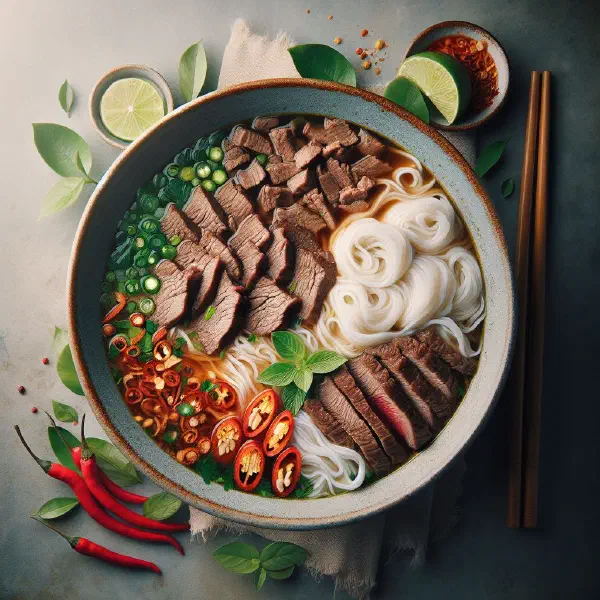
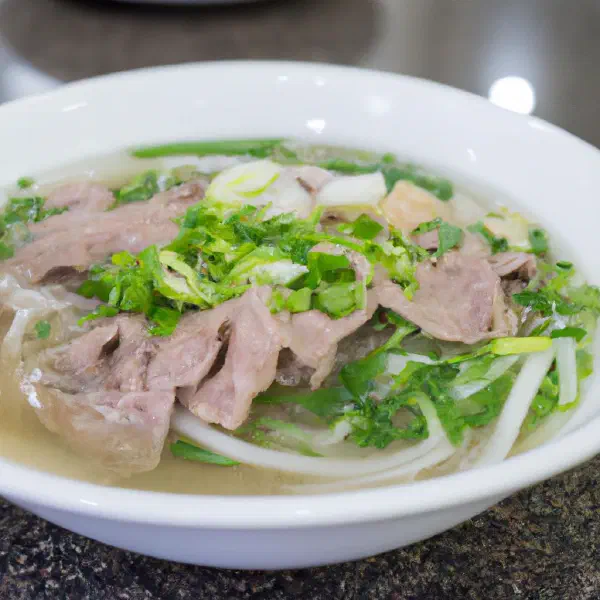
- Lay the raw sliced beef over the noodles and ladle the boiling broth over so it cooks in the bowl.
- Serve with herbs, bean sprouts, lime and chilli on a separate plate.
Gluten-free / lactose-free version
Rice noodles and broth contain no gluten and no dairy. Hoisin sauce contains wheat, so leave it out or use a gluten-free brand. Check the fish sauce.
Tips for vegans and vegetarians
Pho chay is a real Vietnamese dish, built on a broth of charred onion, ginger, daikon, mushroom and the same spices, with tofu and greens. Vietnamese Buddhist cooking is extensive and pho chay is served in temple kitchens.
More tips and tricks
Never let the broth boil, because that is what turns it cloudy. Skim it often. Char the aromatics properly. And slice the beef paper-thin, freezing it for twenty minutes first, so the broth cooks it through on contact.
Adapting the recipe to your taste
Pho ga is the chicken version, lighter and faster. Pho tai is rare beef. Northern pho is plainer, southern pho sweeter with more garnish, and northerners consider hoisin sauce in the bowl a mistake.
Ingredient substitutions
Chicken bones for a lighter broth. Cassia or cinnamon. Any flat rice noodle.
Drink pairing ideas
Ca phe sua da, iced coffee with condensed milk, afterwards. Fresh sugarcane juice. Bia hoi, the fresh draught beer, in Hanoi.
Serving and presentation ideas
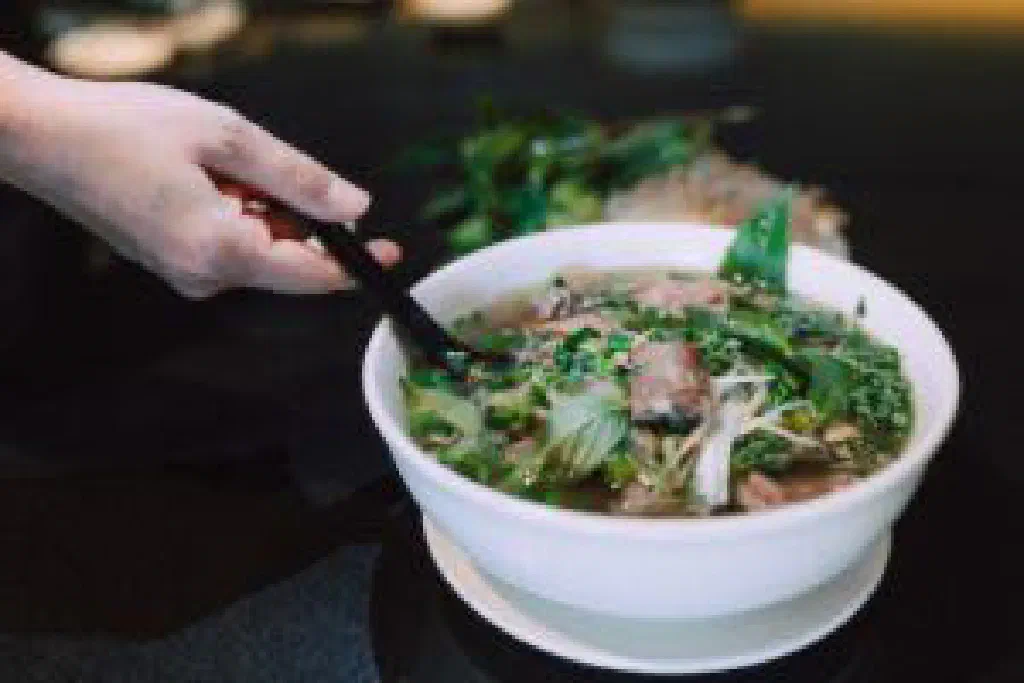
Serve it in a deep bowl with the garnishes on a separate plate so everyone adds their own. Breakfast is the correct time in Vietnam. Chopsticks in one hand, spoon in the other.
A bit of history
Pho appeared in northern Vietnam around the start of the twentieth century, in Nam Dinh province, and probably reflects French demand for beef in a country that had used cattle for ploughing. The name may come from pot-au-feu, though this is contested. It spread south after 1954 and worldwide after 1975. It anchors Vietnamese cuisine.
More recipe ideas
Summary: Pho
Pho is a long-simmered beef broth with rice noodles, raw sliced beef and herbs. Parboil the bones, char the aromatics, never let it boil, and give it four hours.