National Dish Vietnam: Xoi Xeo (Recipe)
In this article
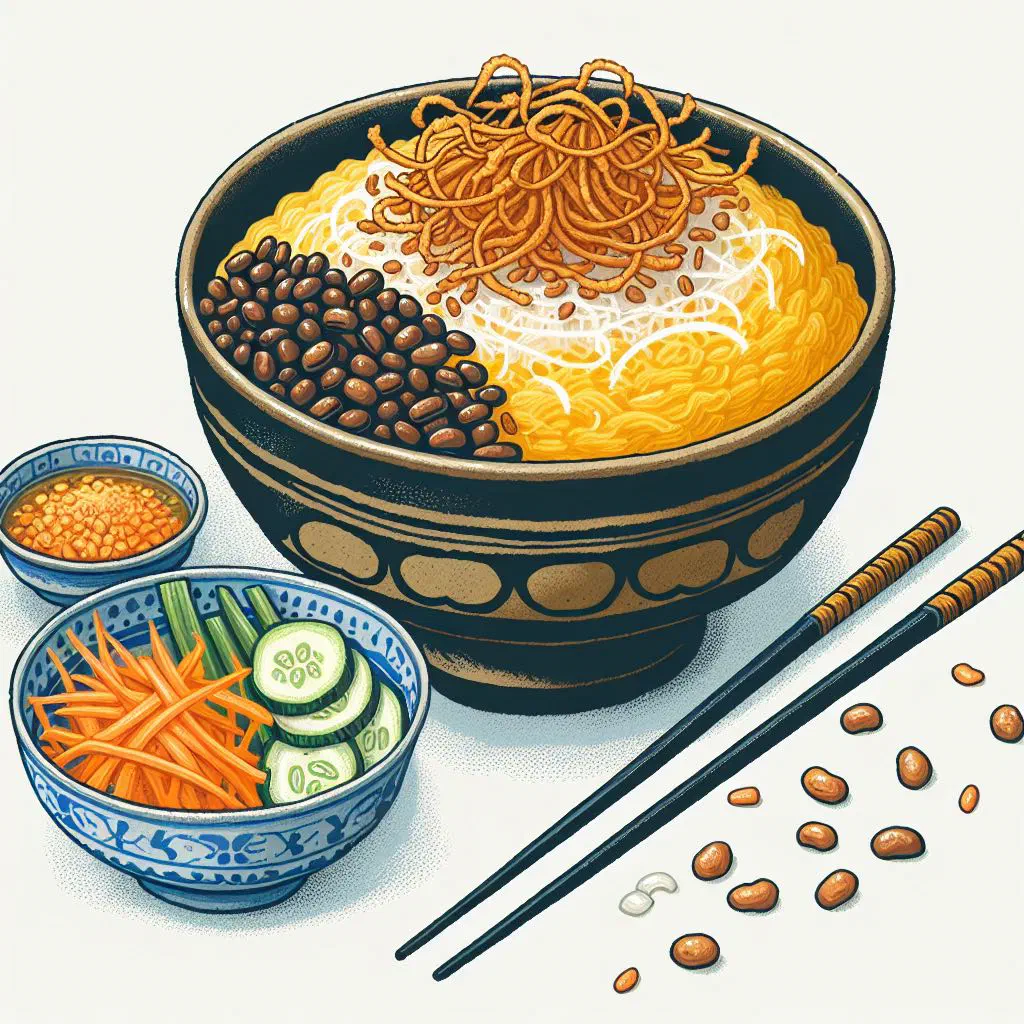
Meet Xoi Xeo, one of Vietnam’s most beloved street-food breakfasts. This golden plate of sticky rice, glowing with turmeric and crowned with crushed peanuts and a creamy mung bean topping, is at once savoury and lightly sweet. Sold from baskets on busy Hanoi street corners, it makes a wonderfully filling start to the day, yet works just as happily as a satisfying snack or a light main. Bring a taste of Vietnam straight to your own kitchen.
About Xoi Xeo
Xoi Xeo is a traditional Vietnamese dish built around glutinous rice, and it is instantly recognisable by its golden turmeric colour. This speciality brings together a whole range of flavours that are sweet and savoury at the same time. A snack or a main course, Xoi Xeo is a much-loved piece of street food that appeals to locals and visitors alike.
Ingredients (serves 1–2)
- 200 g glutinous (sticky) rice
- 1 teaspoon turmeric powder
- 50 g peanuts (roasted and crushed)
- 100 g mung beans (or lentils)
- 1 tablespoon sesame oil
- Salt to taste
- Water for cooking
Shopping for the ingredients
To make your own Xoi Xeo, it is important to choose the right ingredients. Look in your local Asian grocery for glutinous rice, as this particular variety is essential to the dish. The turmeric powder gives the rice its characteristic colour and lends it a distinctive flavour. Roasted peanuts are easy to find in any supermarket or, better still, at an Asian market where freshness is guaranteed.
Preparing the dish
Preparing Xoi Xeo calls for no special culinary skills, just a little patience. First, soak the sticky rice for at least two hours so it takes on the right consistency. While the rice is soaking, you can get the mung beans ready. These should be cooked and then mashed to make the creamy bean topping that rounds the dish off so perfectly.
Step-by-step instructions
- Steam the soaked glutinous rice in a steamer for 30–40 minutes until tender.
- In a small pan, cook the mung beans in water until soft, then mash to a smooth paste.
- Stir the turmeric powder gently and evenly through the cooked rice until it turns golden.
- Heat a little sesame oil in a pan and briefly fry the mashed mung beans.
- Arrange the Xoi Xeo on a plate, scatter over the roasted peanuts and spoon the bean topping on top.
Gluten-free / lactose-free version
Xoi Xeo is naturally gluten-free and lactose-free, which makes it a great option for anyone with these intolerances. Take care that all the ingredients you use, especially the turmeric powder and the peanuts, are also certified gluten-free. If you need to watch your lactose intake, avoid any sweetened bean toppings and use a mixture made purely from mung beans instead.
Tips for vegans and vegetarians
Xoi Xeo is an ideal dish for vegans and vegetarians, as it contains no animal products at all. What is more, the recipe is easy to adapt if you want to add extra plant-based protein. Toss in some toasted soybean sprouts, for example, for more texture and nutrients, or stir a little coconut milk into the bean topping for a richer version. Experiment with different vegetable sides to make the dish even more colourful and wholesome.
More tips and tricks
A few simple tricks can make preparing Xoi Xeo even easier. Make sure the sticky rice is well aerated as it steams so it reaches the perfect consistency. It also helps to dampen the rice with a splash of water just before serving so it does not dry out. Prepare the bean topping in advance and let it cool a little before spooning it over the rice. That way the flavours have time to settle in beautifully.
Adapting the recipe to your taste
The Xoi Xeo recipe is easy to adjust to suit your own preferences. You could add some mixed vegetables, for instance, to work in extra nutrients. If you like things spicier, throw in a little fresh chilli or a spoonful of miso paste. Give your creativity free rein and experiment with different ingredients and seasonings to create your very own version of the dish, much as you might with a plate of Xoi Ngo.
Ingredient substitutions
If you do not have every ingredient to hand, there are good alternatives to be found in your local shop. Instead of glutinous rice you can use other rice varieties, though the flavour and texture will then vary a little. Peanuts can be swapped for cashews or shelled sunflower seeds. The bean topping can also be made by puréeing chickpeas for a slightly different flavour. These swaps make it just as flexible as a coconut-rich Xoi Dua.
Drink pairing ideas
Xoi Xeo goes well with a range of drinks. For an authentic Vietnamese touch, enjoy it with a chilled Vietnamese beer or a refreshing hibiscus tea. A glass of green tea also complements the flavours of the dish wonderfully. If you fancy something sweet, try a lime and mint lemonade afterwards, or finish with a rich Ca Phe Trung for a true café-style treat.
Serving and presentation ideas
Presentation plays a big part in the appeal of Xoi Xeo. Serve the dish on an attractive plate and garnish it with fresh herbs and a few extra peanuts. A squeeze of freshly pressed lime on top brings a splash of colour and a burst of freshness. Creative plating ideas can heighten the enjoyment even further and really show the dish off at its best.
A bit of history
Xoi Xeo has a long and fascinating tradition in Vietnamese cuisine. The dish is often served at festivals and special occasions, and it is a symbol of community and togetherness. Its origins can be traced back to imperial-era Vietnam, where, so the story goes, it was served to the emperor as a special delicacy, much to the pleasure of his guests. Today it remains a cornerstone of Vietnamese cuisine enjoyed across the country.
More recipe ideas
Summary: Xoi Xeo
Xoi Xeo is a unique Vietnamese dish that wins you over with its harmonious flavours and its decorative presentation. With its simple preparation and adaptable ingredients, it is perfect for any occasion. A snack or a main course, it brings a touch of Vietnam to the plate. Give it a try and let the rich tapestry of Vietnamese cooking work its magic on you.