National Dish Yemen: Martabak (Recipe)
In this article
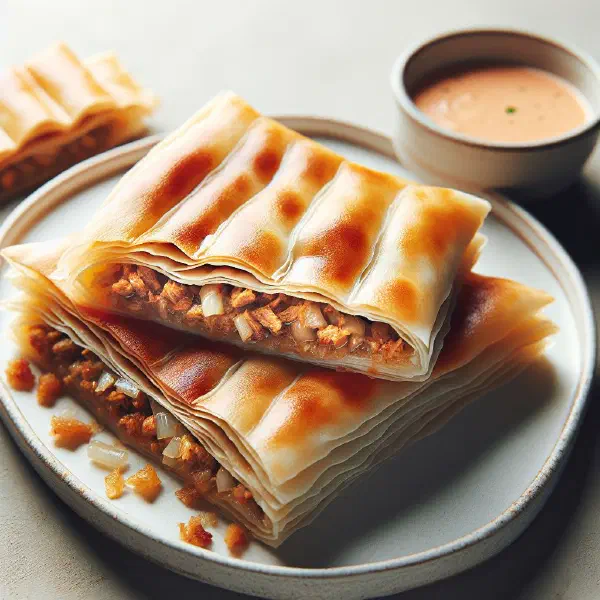
Discover Martabak, one of Yemen’s most beloved street foods. This stuffed flatbread pairs a crisp, golden dough with a savoury filling of spiced meat or vegetables, all folded into a satisfying pocket. Fragrant with cumin and paprika, it is the kind of hearty snack that brings people together, whether at a busy market stall or around the family table. Bring a taste of Yemeni market life straight into your own kitchen.
About Martabak
Martabak is a traditional Yemeni dish prized for its delicious filling and its crisp, golden dough. Though it originated in Yemen, it has spread widely across the Arab world and beyond, taking on countless local variations along the way. It is most often served as a snack or street food, and its endlessly adaptable fillings, which can be either savoury or sweet, are a big part of its appeal. More than just a treat for the palate, martabak is a genuine piece of cultural tradition.
Ingredients (serves 1–2)
- 250 g plain flour
- 1 teaspoon salt
- 1 teaspoon sugar
- 1 egg
- 200 ml water
- 2 tablespoons vegetable oil
- 150 g minced meat or vegetables (as preferred)
- 1 onion, diced
- Spices (cumin, paprika, pepper)
Shopping for the ingredients
The ingredients for martabak are easy to find in most supermarkets. Try to choose fresh produce wherever you can, especially the vegetables and meat. For a more authentic touch, look for specific spices at a Middle Eastern grocery. These give your martabak the perfect flavour and aroma that mark the traditional preparation. Fresh, good-quality ingredients make all the difference to the finished dish.
Preparing the dish
Before you start cooking your martabak, a little groundwork with the ingredients goes a long way. Chop the vegetables neatly and have your spices measured out and ready. If you are using minced meat, it is worth browning it first and seasoning it well before you begin. This kind of preparation keeps the cooking process smooth and efficient, much as it does when making a batch of Mahshi.
Step-by-step instructions
- Mix the flour, salt, sugar, egg and water into a smooth dough and leave it to rest for 30 minutes.
- Meanwhile, prepare the filling: fry the onion together with the minced meat or vegetables and season with spices.
- Roll the dough out thinly and heat a little oil in a pan.
- Lay the thin sheet of dough in the pan, spread the filling over one half and fold the other half over the top.
- Fry both sides until golden brown, then serve.
Gluten-free / lactose-free version
For a gluten-free version you can use gluten-free flour. There are many suitable alternatives, including almond flour and coconut flour. For the filling, lactose-free cheese or plant-based options let you keep the dish lactose-free without losing any of that delicious flavour. With a few simple swaps, martabak becomes a treat everyone can enjoy.
Tips for vegans and vegetarians
For vegan martabak, swap the minced meat for tofu, tempeh or a mix of pulses. Take care that every ingredient you use is plant-based, right down to the spices. Vegetables in a range of colours make the dish both more appealing and more nutritious, and vegan sauces or dips pair beautifully with martabak to round it off. A generous, colourful vegetable filling can be every bit as satisfying as the classic version.
More tips and tricks
To make sure your martabak has the perfect crunch, heat the oil thoroughly before you begin. Resting the dough also helps, making it more elastic and easier to handle. Experiment with different fillings and spice blends to create a martabak that is all your own. The more creative you are, the more exciting the result, a spirit of playful improvisation runs through much of Yemeni cuisine.
Adapting the recipe to your taste
The beauty of martabak lies in its versatility. You can adjust the filling entirely to suit your personal preferences. Popular variations include cheese, spinach or an assortment of vegetables. If you like a bit of heat, add some chilli or cayenne pepper. Let your imagination run free and shape the dish so it matches your own taste exactly.
Ingredient substitutions
If you do not have certain ingredients to hand, there is always an alternative. The egg in the dough, for example, can be replaced with a chia or flaxseed substitute to keep everything bound together. Instead of minced meat, fried mushrooms make a hearty, meat-free filling. Just take a look around your kitchen and use what you already have, the same resourceful approach that works well for Mutabbaq.
Drink pairing ideas
Refreshing drinks pair especially well with martabak. Try a fruity tea or a cooling mint lemonade alongside it. A classic ayran or another yoghurt drink also harmonises wonderfully with the dish. These drinks help to balance the warm spice notes and offer a refreshing contrast to the rich, savoury filling.
Serving and presentation ideas
The presentation of martabak can be lifted with the addition of fresh herbs and colourful vegetables. Serve the pieces on an attractive plate and garnish them with a dip, such as a spicy sauce or a yoghurt dip. Play with colours and shapes, a beautiful presentation heightens the pleasure of eating. Don’t forget to serve the plates warm to make the most of the experience.
A bit of history
Martabak has its roots in Yemen and is closely bound up with the cultural identity of the region. As it spread to other countries it developed into many variations, taking on different fillings and methods of preparation. It is regarded as a popular street food and is often sold from stalls at markets. This tour shows how traditional food can adapt to different cultures while still holding on to its character, much like the well-travelled Samosa.
More recipe ideas
Summary: Martabak
Martabak is an incredibly versatile dish that appeals to the palate while also telling a story. From choosing the ingredients to the cooking and presentation, there are countless ways to adapt this traditional Yemeni recipe. Martabak is a treat that is easy to recreate at home. Give it a try and share your own creations with friends and family.