National Dish Yemen: Saltah (Recipe)
In this article
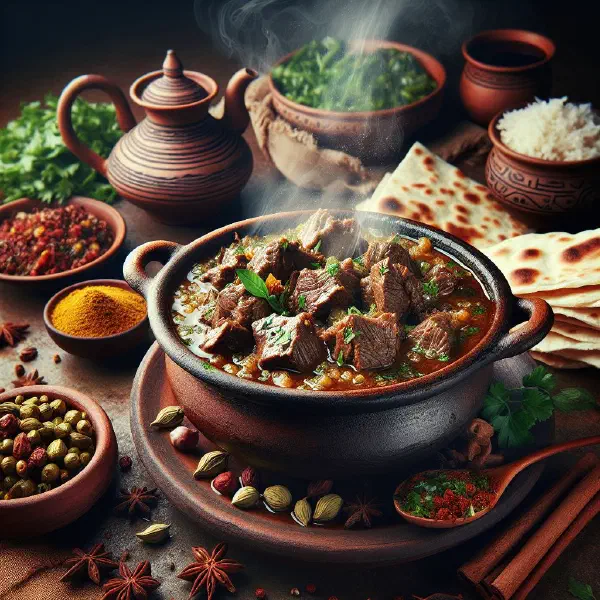
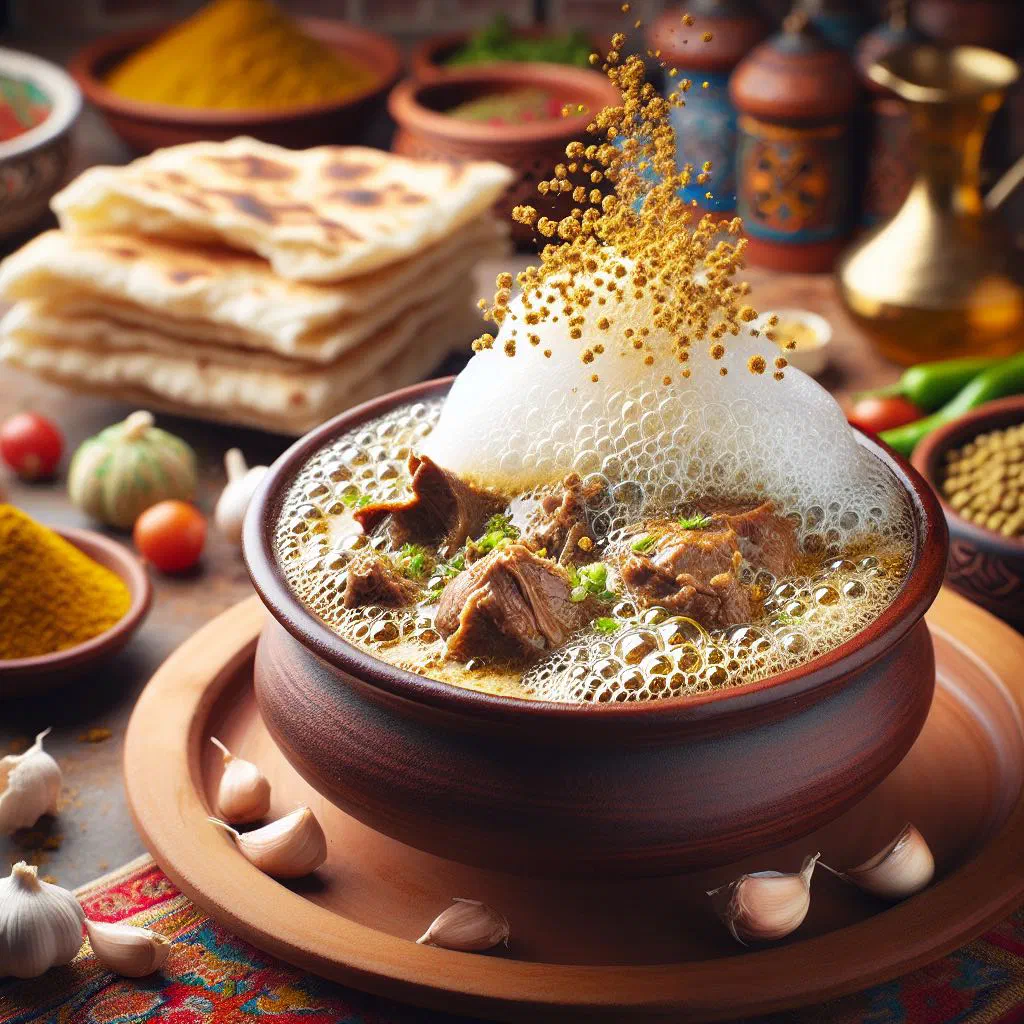
Saltah arrives at the table still bubbling in a stone pot, with a pale green froth on top. The froth is hulba, whipped fenugreek, and it is the thing that makes saltah saltah rather than an ordinary stew.
About Saltah
The base is maraq, a meat and vegetable broth. Onto it goes hulba, fenugreek seed soaked overnight and beaten with water until it foams, and sahawiq, a raw chilli, tomato and coriander relish.
The pot is soapstone, madra, heated until it glows so the food keeps cooking at the table. Bread is the only cutlery.
Ingredients (serves 1–2)
- 300 g lamb or beef, cubed
- 2 cups vegetable stock
- 2 potatoes, diced
- 1 onion, roughly chopped
- 2 tablespoons fenugreek seeds, soaked overnight (for the hulba)
- 2 tomatoes, 1 green chilli and a bunch of coriander (for the sahawiq)
- 2–3 tablespoons olive oil
- Salt and pepper, to taste
- Fresh herbs, to garnish (such as coriander or parsley)
Shopping for the ingredients
Whole fenugreek seeds from a Middle Eastern or Indian shop. Lamb shoulder on the bone. Yemeni flatbread, malooj or khobz, or any large flatbread. A soapstone pot if you can find one, otherwise a small cast-iron dish.
Preparing the dish
Soak the fenugreek overnight, drain, then whisk it hard with cold water until it turns pale and foams like beaten egg white. It takes several minutes and it is the only difficult part. Make the sahawiq by pounding tomato, chilli and coriander to a rough paste.
Step-by-step instructions
- Soak the fenugreek seeds overnight, drain, then whisk with cold water until pale and frothy. Set aside.
- Pound the tomatoes, chilli and coriander into a rough sahawiq relish.
- Heat the olive oil in a pan and cook the onion until golden brown.
- Add the cubed meat and sear well on all sides.
- Pour in the stock, add the potatoes and bring to the boil.
- Reduce the heat and simmer 1–1.5 hours, until the meat is tender.
- Transfer to a very hot stone or cast-iron pot so the stew keeps bubbling.
- Spoon the hulba froth over the top, add a spoonful of sahawiq, garnish with herbs and serve at once.
Gluten-free / lactose-free version
The stew contains no gluten and no dairy. The bread does, so use a gluten-free flatbread. Fenugreek and the relish are naturally suitable.
Tips for vegans and vegetarians
Saltah without meat, built on vegetable broth with potato, courgette and tomato, is common and is eaten during shortages. The hulba and sahawiq carry the dish anyway. Shorbat adas, the lentil soup, is the other vegan staple.
More tips and tricks
Whisk the hulba until it genuinely foams, since a thin fenugreek paste is not the same thing. Get the serving pot properly hot. And make the sahawiq fresh, because it loses its point within hours.
Adapting the recipe to your taste
Maraq is the same stew without the hulba. Fahsa uses shredded meat instead of cubes. More sahawiq is the usual adjustment.
Ingredient substitutions
Lamb, beef or chicken. Any vegetables you have; courgette and tomato are standard. Ground fenugreek will not whip and does not work.
Drink pairing ideas
Qishr, the drink made from coffee husks with ginger, which is Yemen’s own. Sweet black tea. Water with the meal.
Serving and presentation ideas
Serve the pot in the middle of the table with torn flatbread around it, and let everyone scoop directly. It is lunch, the main meal of the Yemeni day, and it is eaten communally.
A bit of history
Yemen gave the world coffee: the port of Mokha exported it from the fifteenth century and lent its name to the drink. Saltah is thought to have developed in Sanaa and spread from there. The country has been at war since 2015 and food insecurity is severe. Saltah anchors Yemeni cuisine.
More recipe ideas
Summary: Saltah
Saltah is a bubbling meat and potato stew topped with whipped fenugreek froth and fresh chilli relish. Whisk the hulba until it foams, serve the pot scorching hot, and eat it with bread.